

Tunisia and Iran Strengthen Diplomatic Ties Amid Regional Tensions
In a move that signals a deepening of diplomatic relations, Tunisia and Iran have taken significant steps toward strengthening bilateral ties. The latest high-level meeting between Tunisian President Kaïs Saïed and Iranian Foreign Minister Abbas Araghtchi underscores a mutual desire to enhance cooperation across multiple sectors, despite ongoing regional instability and international scrutiny.
A Meeting Against a Tense Backdrop
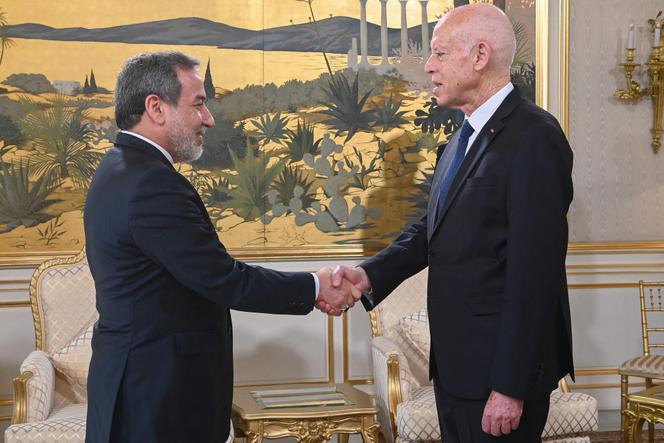
The diplomatic engagement took place against a tense regional backdrop. On September 10, 2025, as international attention was focused on the “Global Sumud Flotilla”—a humanitarian aid convoy docked in the Bay of Tunis that had reportedly suffered two separate drone attacks—President Saïed hosted the Iranian foreign minister at the Carthage Palace, located just a few hundred meters from the port.
According to a statement released by the Tunisian presidency, the two leaders discussed what they termed “the regional situation and systematic violations of security and stability, particularly in occupied Palestine.” The talks also covered what was described as “the catastrophic situation in Gaza, the genocide and crimes perpetrated by the Zionist regime in the occupied Palestinian territories, repeated aggressions against countries in the region, and the recent terrorist attack against Qatar.”
Deepening Bilateral Cooperation
Beyond regional politics, the Iranian delegation, led by Foreign Minister Araghtchi, held separate talks with Tunisian Foreign Minister Mohamed Ali Nafti. The discussions aimed at outlining a roadmap for enhanced collaboration in several key areas, including economy, trade, tourism, science and technology, health, medicine, and culture.
This isn’t the first time Tunisia has shown interest in closer ties with Iran. Earlier reports, including a May 2024 analysis titled “Tunisia: Kaïs Saïed’s Iranian Temptation,” pointed to a growing alignment between the two nations, driven in part by shared criticism of Israeli policies and a desire to counter Western influence in North Africa and the Middle East.
Regional Implications and International Reactions
The warming relationship between Tunisia and Iran is likely to draw attention from regional powers and international observers. Both countries have historically positioned themselves as defenders of Palestinian rights, and their strengthened alliance may signal a broader realignment in Maghreb and Middle Eastern diplomacy.
Some analysts suggest that Tunisia’s pivot toward Iran could be interpreted as a move to diversify its international partnerships amid economic challenges and political isolation. For Iran, expanding its influence in North Africa through diplomatic and economic channels aligns with its broader strategy of building alliances beyond the Gulf region.
Challenges and Opportunities
While the rhetoric emphasizes cooperation and mutual interest, significant challenges remain. Tunisia continues to navigate a delicate balance between its historical ties with Western nations and its emerging relationships with non-Western powers like Iran and Russia. Economic pressures, domestic political constraints, and international sanctions on Iran may complicate the implementation of announced joint initiatives.
Nevertheless, the meeting between President Saïed and Foreign Minister Araghtchi represents a clear statement of intent. Both nations appear committed to exploring new avenues of partnership, even as they operate within a complex and often volatile geopolitical landscape.
Looking Ahead
As Tunisia and Iran move forward with their diplomatic and economic agendas, the international community will be watching closely. The extent to which these two nations can translate rhetoric into tangible outcomes—whether through trade agreements, cultural exchanges, or coordinated political stances—will determine the long-term significance of this renewed partnership.
What is clear is that in an increasingly multipolar world, middle powers like Tunisia and Iran are seeking to assert their agency and redefine their roles on the global stage. Their collaboration may well become a case study in how regional diplomacy is evolving in the 2020s.
Source: Le Monde