

Gaza’s Displaced Find Shelter in the Ruins of Yasser Arafat’s Former Home
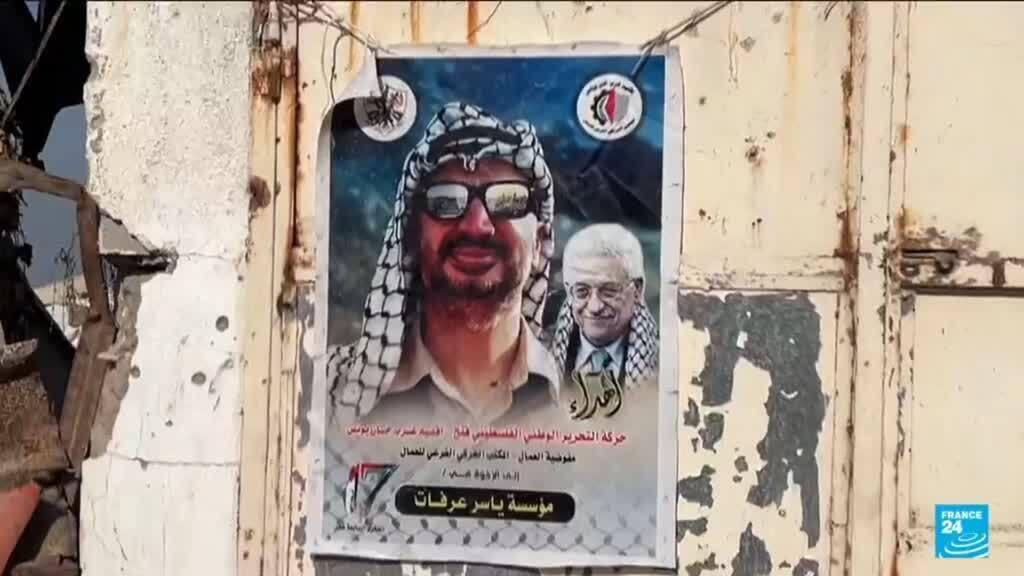
In the shattered landscape of Gaza City, where the familiar landmarks of daily life have been reduced to rubble and dust, symbols of the past are being repurposed for a desperate present. The former residence of the late Palestinian leader Yasser Arafat, a site once imbued with political history, now stands as a partial ruin itself, its scarred walls offering meager protection to families with nowhere else to go. This is not a deliberate pilgrimage to a historic site, but a stark necessity born of survival.
A Refuge of Last Resort
How does a place transition from a seat of power to a shelter for the powerless? The journey is written in the cracks along its concrete and the dust covering its floors. Israeli airstrikes have left their mark on the compound, shearing off sections of the building and exposing interiors to the elements. Yet, within these damaged husks, Gaza’s displaced have found a semblance of refuge. For families who have lost everything—homes, businesses, a sense of future—the symbolic weight of Arafat’s legacy is far less pressing than the physical weight of a ceiling, however compromised, over their heads.
“We didn’t come here because it was Arafat’s house,” one resident explained, his voice weary. “We came because it has walls, and most of our neighborhood does not.” This sentiment echoes throughout the building, where rooms that might have once hosted diplomatic discussions now host families huddled together, sharing what little food and water they have. The irony is not lost on them; they are seeking safety in a structure that was itself a target, a poignant metaphor for the pervasive insecurity that defines life in Gaza.
The Erosion of History and Home
The appropriation of this historical site for basic human shelter speaks volumes about the severity of the current humanitarian crisis. When the most fundamental human need—safety—is obliterated, the preservation of historical monuments becomes an unaffordable luxury. The residents moving through its damaged corridors are not curators of history; they are its latest, and most vulnerable, characters.
Living conditions are dire. There is no running water, no reliable electricity, and the constant threat of further violence hangs in the air like a pall. Windows shattered by blasts are patched with plastic sheeting, offering little defense against the cold night air. The children playing in the rubble-strewn courtyard are too young to remember Arafat or understand his significance. For them, this is not a piece of history; it is simply the latest in a series of unstable homes, a confusing backdrop to a childhood defined by displacement and fear.
Between Symbolism and Survival
The scene forces a difficult question: what happens to a people’s identity when the physical tokens of their political struggle are destroyed and then repurposed for mere survival? The residence was more than just a building; it was a tangible link to a specific era of the Palestinian national movement. Now, its primary function is as a bulwark against the elements. This shift from the symbolic to the utilitarian reflects the brutal prioritization forced upon a population in crisis. Politics and history are abstract concepts when your immediate concern is finding a safe place for your children to sleep.
Yet, even in its diminished state, the building cannot fully shed its symbolic skin. For the older generation taking shelter within, the walls are a silent reminder of a different time, a contrast that deepens their current sense of loss. They remember the hope that Arafat once represented for many, and now they witness his former home becoming a testament to a hope that has been severely tested. It is a continuous cycle of loss—of life, of homes, and now, of the physical landmarks of their collective memory.
A Microcosm of a Wider Catastrophe
The story of Arafat’s former residence is not an isolated incident. It is a microcosm of the wider devastation engulfing the Gaza Strip. Schools, hospitals, mosques, and apartment blocks have all shared a similar fate, their intended purposes erased by conflict. The fact that a building of such historical note has met this same end underscores the indiscriminate nature of the destruction. No site, regardless of its past significance, is granted immunity.
International aid organizations continue to sound the alarm about the collapsing humanitarian situation, warning of widespread displacement, disease, and a lack of basic necessities. The families in Arafat’s old home are just a few among hundreds of thousands searching for shelter. Their choice of refuge is a powerful indicator of how few options remain. When every other door has been blown off its hinges, you take shelter where you can, even if that shelter is a damaged monument to a complicated past.
A Testament to Resilience
In the end, the narrative is no longer about Yasser Arafat. It is about the relentless resilience of ordinary people. The families residing in the ruins are not defined by the building’s history, but by their determination to persist in the face of unimaginable hardship. They have carved out a space for life amidst the debris, demonstrating a will to survive that transcends politics and history.
As the sun sets over Gaza City, casting long shadows through the broken framework of the residence, the focus is on the practicalities of another night: sharing stories to keep spirits up, protecting the children from the cold, and hoping for a quiet dawn. The story of this building is still being written, not by statesmen or historians, but by the displaced families whose daily struggle for existence has become its new, and most compelling, chapter.
Source: France 24