

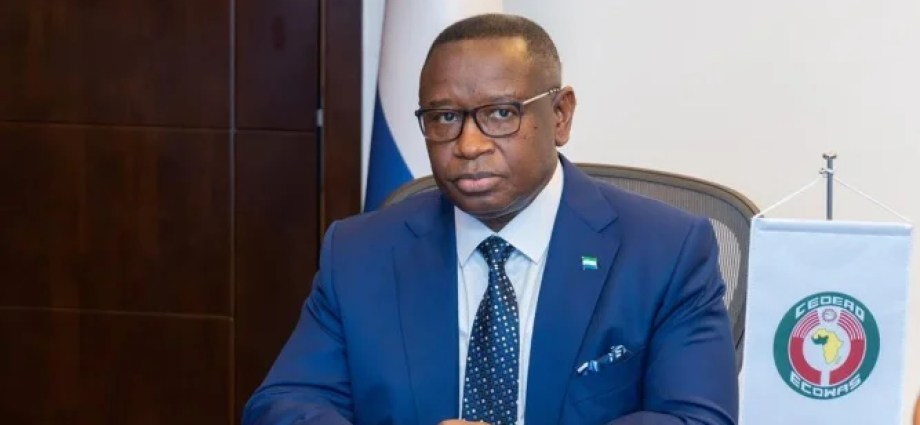
ECOWAS Under Bio’s Chairmanship Thwarts Benin Coup Attempt: A Test of Regional Resolve
An analysis of the regional bloc’s decisive action and its implications for West Africa’s democratic future.

Suggested image: A symbolic graphic of West African flags or a map of the ECOWAS region.
Swift Regional Action Prevents Political Crisis
The Economic Community of West African States (ECOWAS), under the chairmanship of Sierra Leone’s President Julius Maada Bio, has been credited with orchestrating a swift and coordinated response that foiled an attempted military takeover in the Republic of Benin. According to official statements from Freetown, the bloc’s decisive intervention prevented a potential political crisis, reinforcing its stated commitment to constitutional order.
Bio’s Stewardship and the ECOWAS Protocol
Press Secretary Yusuf Keketoma Sandi, representing the office of Chairman Bio, framed the incident as a critical test of regional leadership. He emphasized that President Bio acted with “clarity, urgency and conviction,” leveraging the ECOWAS platform to communicate with fellow heads of state and unify a regional stance. This action, Sandi stated, created the necessary diplomatic pressure to preserve the administration of Benin’s President Patrice Talon.
The event underscores the operationalization of ECOWAS protocols against unconstitutional changes of government—a principle that has become a cornerstone of the bloc’s identity in recent years, following a wave of coups in Mali, Guinea, Burkina Faso, and Niger.
Context: A Region Under Democratic Strain
The attempted disruption in Benin is particularly significant because the country has been viewed as a relatively stable democracy in a volatile neighborhood. Its susceptibility to military adventurism signals the pervasive nature of the threat facing West African governance. Analysts note that this incident moves the epicenter of coup attempts from the Sahel to the coastal states, presenting a new challenge for regional stability.
President Bio’s chairmanship is now being defined by proactive engagement. Sandi referenced Bio’s previous direct intervention in Guinea-Bissau following an attempted coup there, where the chairman personally traveled to Bissau to demand the restoration of constitutional order. This pattern suggests a more hands-on leadership style for the ECOWAS chair, moving beyond statements of condemnation.
The “So What”: Implications for Regional Security
The successful deflection of the Benin attempt carries several key implications:
- Credibility for ECOWAS: After facing criticism for inconsistent responses and the eventual acceptance of juntas in some member states, a clear success helps rebuild the bloc’s deterrent credibility.
- The Chairman’s Role: It elevates the influence of the rotating ECOWAS chairmanship, demonstrating that assertive diplomatic leadership can yield tangible results.
- A Warning Signal: The unified stance serves as a direct message to militaries across the region that attempts to seize power will be met with immediate and coordinated regional opposition.
- Democratic Morale: For civil society and pro-democracy actors, it provides a counter-narrative to the seeming inevitability of military takeovers.
Unanswered Questions and Future Vigilance
While the immediate threat was neutralized, the episode raises unresolved questions. The specific details of the attempted takeover in Benin remain unclear from public reports. Furthermore, the long-term strategy of ECOWAS to address the root causes of military discontent—including poor governance, economic stagnation, and corruption—remains its most significant challenge. Preventing coups reactively is one thing; building resilient democracies that are immune to them is another.
As President Bio’s tenure as chairman continues, the focus will likely shift from crisis response to preventative diplomacy. The test for ECOWAS will be whether this demonstrated unity can be institutionalized and applied consistently, not just in moments of acute crisis but in the ongoing, difficult work of strengthening democratic norms across West Africa.
Primary Source Attribution: This report is based on information and statements originally published by The Calabash Newspaper in their article, “President Bio’s Leadership Credited for ECOWAS’ Swift Action in Foiling Attempted Military Takeover in Benin”.