

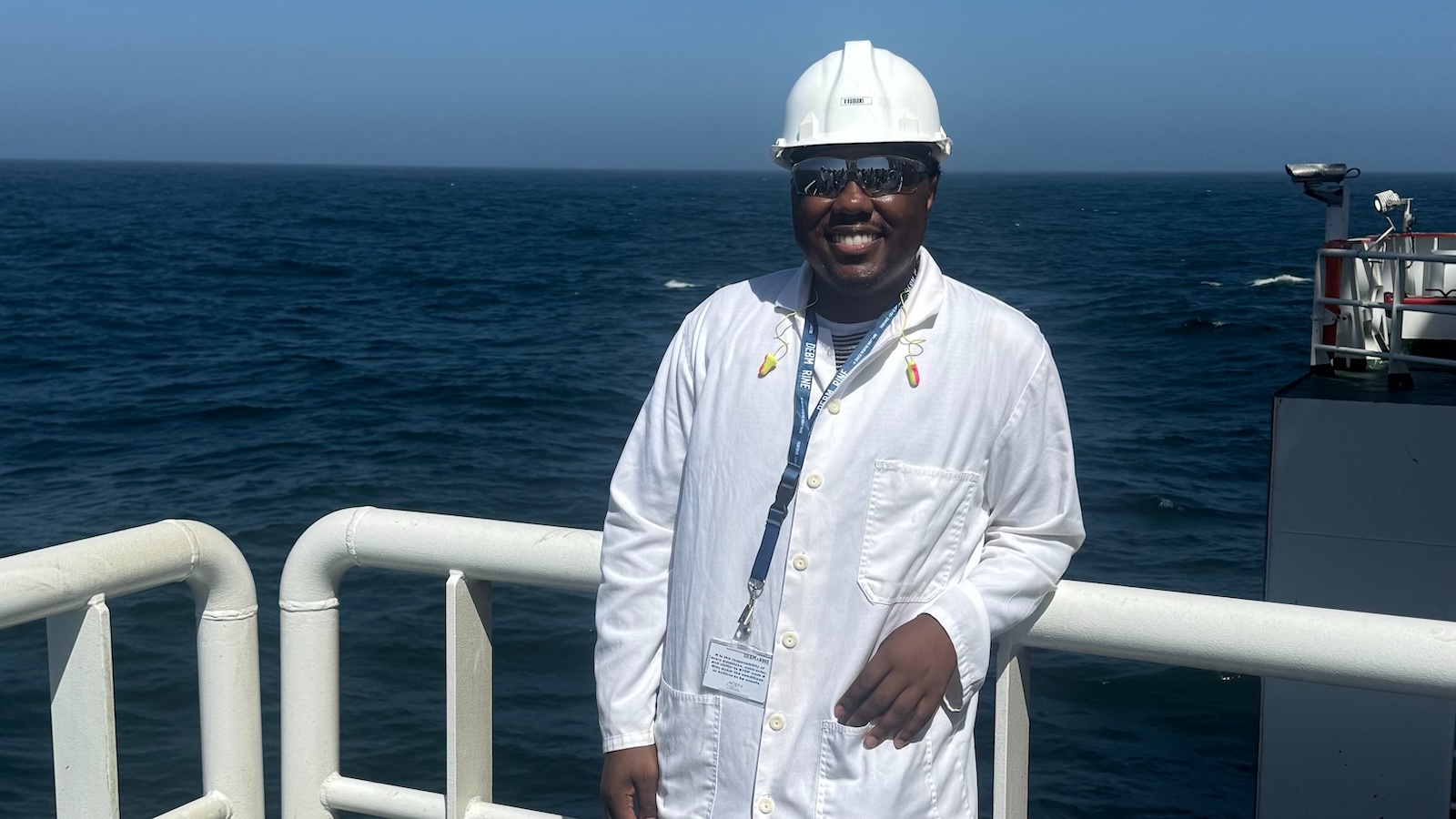
When De Beers invited me to Namibia to see how its diamonds are sourced, I assumed I knew what I was signing up for. I imagined dusty land mines, heavy machinery, maybe a safety vest and hard hat moment for the photo archive somewhere between Snow White and a National Geographic spread. What I did not expect was to board a helicopter and fly over the Atlantic Ocean toward a diamond vessel stationed so far offshore that land simply vanished.
That was my first clue that I had underestimated this entire operation. “Toto, we aren’t in Kansas or the Upper East Side anymore”.
Diamonds, it turns out, are not born in boutiques or showrooms. They begin deep underground, forming over millions of years in kimberlite pipes far inland. Time and erosion do the rest. The Orange River carries them toward Namibia’s southern coast, where they settle into ancient beaches and gravel terraces, and in some cases, continue their journey into the ocean itself.
De Beers operates here through two joint ventures. Namdeb handles land-based mining. Debmarine Namibia recovers diamonds from the seabed. Together, they power one of the most sophisticated diamond supply chains in the world.
Land mining in Namibia is alluvial, which means diamonds are recovered from the places water abandoned rather than pulled directly from volcanic source rock. Along the coast, massive excavation operations cut into ancient terraces and even push into the surf zone. Gravel is hauled to processing plants like Elizabeth Bay, where it is washed, crushed, sorted and scanned using technology that feels less industrial and more TSA for gemstones. Tons of material move through vibrating racks and rotating drums to yield just a handful of gem-quality stones. For decades, towns like Oranjemund defined this world. Trucks moved earth by the ton. Careers were built here.
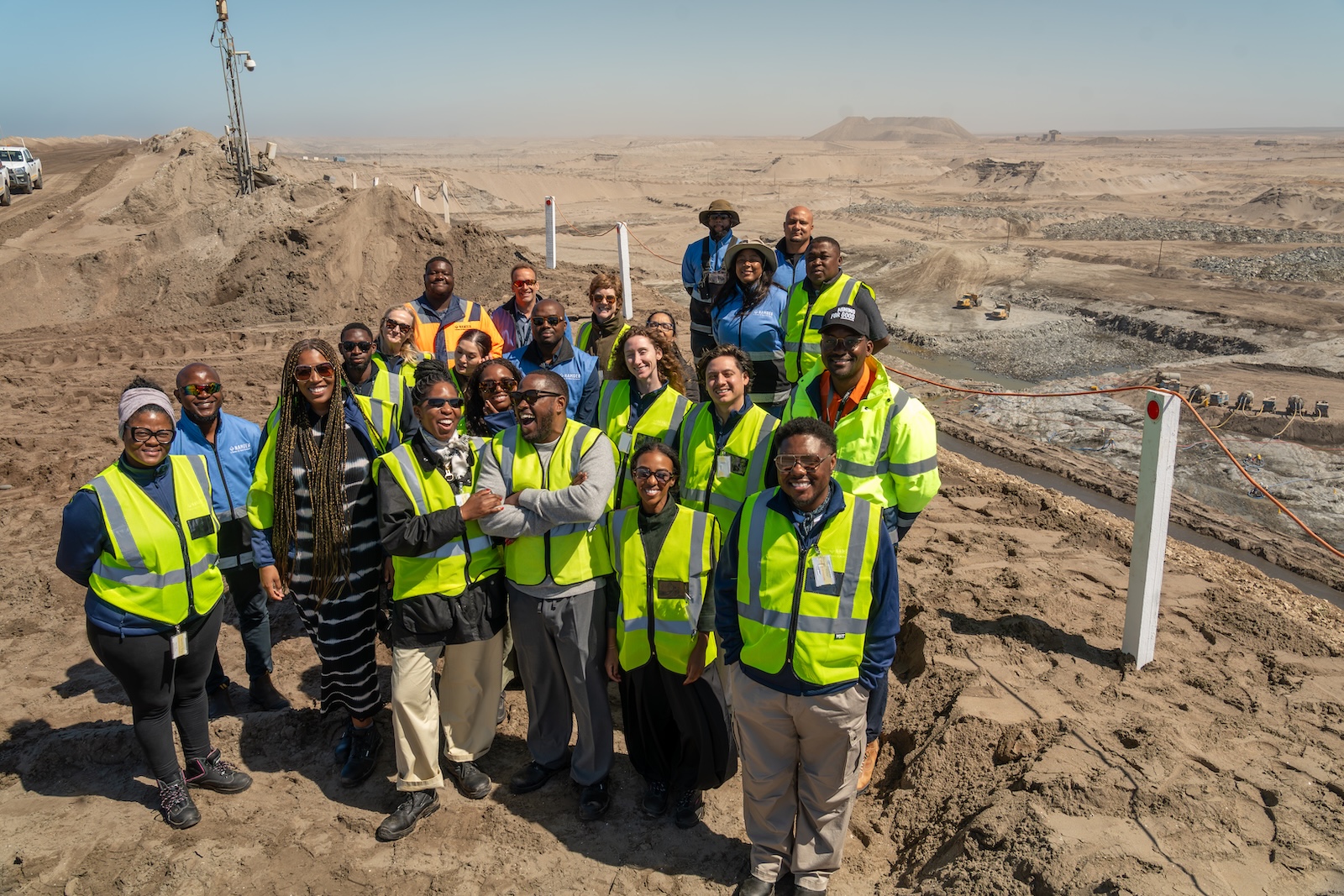
Then the industry followed the diamonds offshore.
To understand that shift, we boarded a helicopter and flew out to a Debmarine vessel anchored in the middle of the Atlantic. Landing on that ship was surreal. I was standing on a floating operation quietly processing diamonds worth millions, surrounded by ocean in every direction. It felt chic in a way fashion rarely captures. Not styled. Not performative. Just rare.
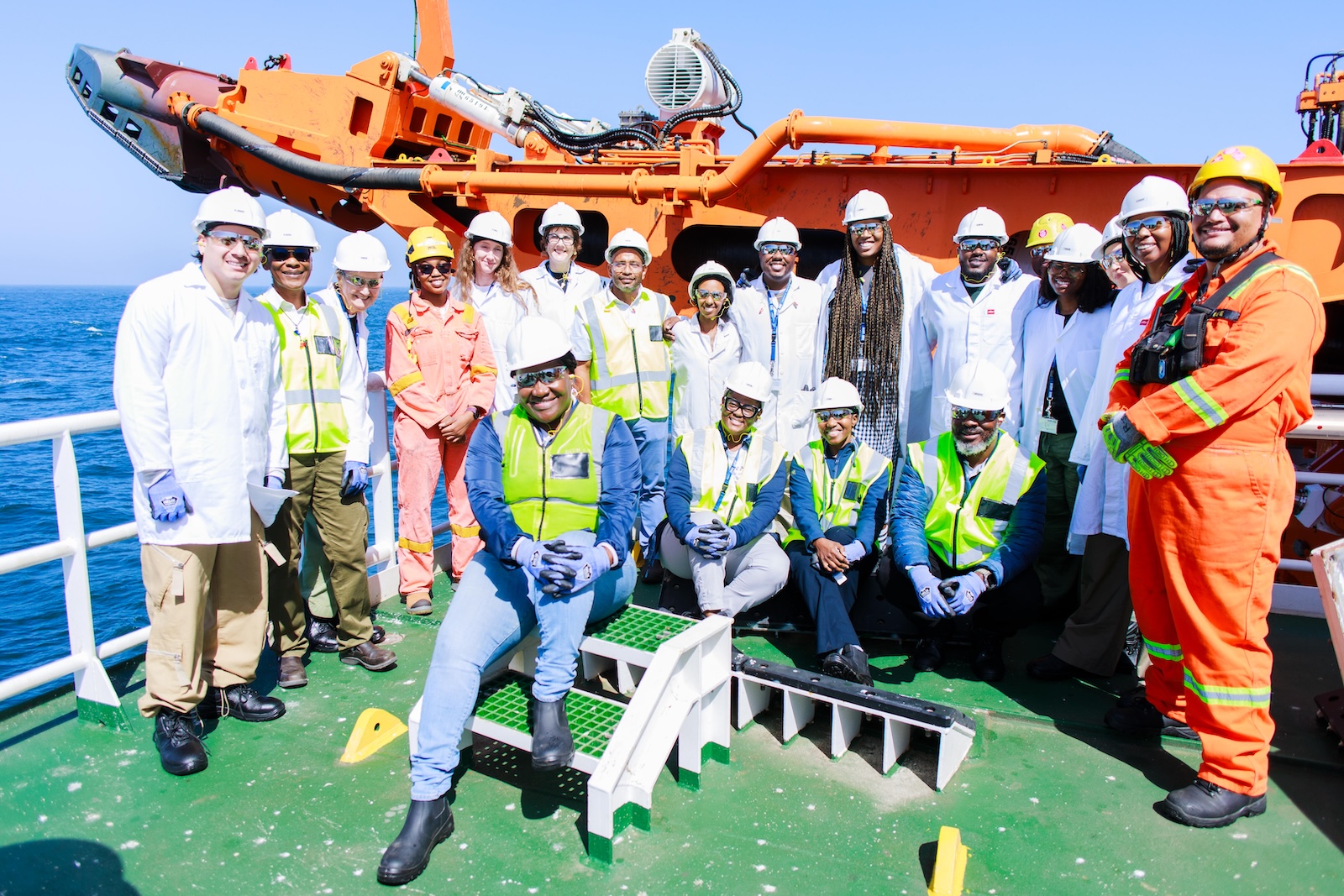
The vessels operate for years at a time, with crews living onboard and working twelve-hour shifts. The mining itself is precise. Seabed sediment is lifted, diamonds are recovered, and 99% of the material is returned to the ocean floor. No chemicals. No explosions. It is the reason Namibia now leads the world in marine diamond recovery, accounting for roughly 70 -75% of its total diamond production.
Everywhere we went, security was tight. Multiple checkpoints. Badges. Escorts. Entering and exiting each facility felt like stepping into Beyoncé’s home. Controlled, serious and absolutely not up for debate.
What surprised me most, though, was the workforce. Namdeb and Debmarine have created thousands of jobs across Namibia, many for people hired straight out of school and trained into highly specialized roles. We watched diamond sorters authenticate stones under strict lighting conditions, identifying the difference between industrial material and gem-quality diamonds with near-surgical precision. At one point, we were even allowed to handle the diamonds ourselves. Playing with them feels like the wrong phrase, but it’s the only honest one.

The pipeline does not end with extraction. Companies like Tate Diamonds represent the next chapter. As part of De Beers’ broader ecosystem, Tate focuses on polishing and beneficiation, ensuring that value stays closer to the source through craftsmanship and training. That relationship now feels especially tangible with Tate’s recent opening of a physical retail store in Atlanta. Diamonds that began in Namibia are now being cut, polished, and sold in a city that understands legacy, Black ownership, and cultural continuity.

The economic impact is substantial. In 2023 alone, Debmarine contributed over N$5.3 billion (N$: Nambian dollars) in royalties, taxes and dividends. From 2020 to 2024, that figure reached N$20 billion, about U.S. $1.2 billion. That money supports STEAM (Science, Technology, Engineering, Arts, and Math) education for tens of thousands of students, funds hospitals and neonatal units, sustains sports programs, and backs environmental efforts like the Namibian Foundation for the Conservation of Seabirds (NAMCOB), a seabird conservation initiative rescuing endangered African penguins along the coast.
I came to Namibia as a fashion editor expecting a spectacle. I left with context.
@vqvaughnsedit started my fashion career as an accessories intern checking in and out jewelry for photo shoots to being invited on a once in a lifetime brand trip with the leading diamond brand in the world @De Beers . thank you Lauren Conrad #fyp #fyppppppppppppppppppppppp #f #fashion #namibia ♬ Unwritten – Natasha Bedingfield
Diamonds still sparkle. That part remains untouched. But now, when I see one on a runway or a red carpet, I’ll think about helicopters over open water, security checkpoints, young Namibians trained into skilled careers and ships that quietly process luxury that seals climb all over while the rest of the world watches the shine. Luxury, it turns out, is never effortless. It just hides the work exceptionally well.