

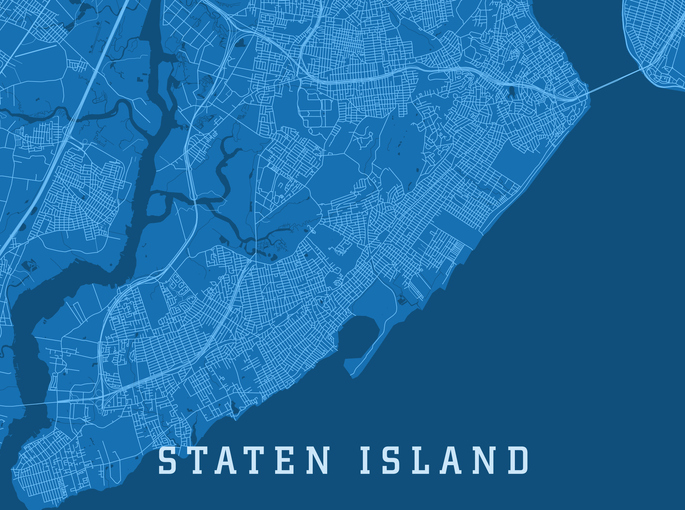
The election of Democratic Socialist Zohran Mamdani as New York City’s next mayor has acted as a political catalyst, igniting a renewed and fervent push for secession among Republican leaders on Staten Island. This movement, however, is far more than a simple reaction to a single election; it is the latest eruption of a long-simmering geological fault line within the city’s political landscape. The borough’s politicians are strategically channeling decades of perceived neglect, cultural alienation, and political marginalization to fuel a campaign for independence.
“The sentiment is only going to get louder,” Staten Island Borough President Vito Fossella warned, framing the election as a fundamental mismatch. The voting data underscores this divide: while Mamdani secured victory citywide, he garnered a mere 23% of the Staten Island vote. Former Governor Andrew Cuomo, running as an independent, dominated with 55%, and Republican Curtis Sliwa took 21%. This stark disparity provides a powerful narrative for secessionists, who argue that the borough’s political will is being systematically overruled by the more populous, liberal boroughs of Manhattan, Brooklyn, and Queens.
The rhetoric has escalated beyond mere dissatisfaction. State Assemblyman Sam Pirozzolo, who recently hosted a rally where attendees signed a “Staten Island Independence Declaration,” frames the conflict in existential terms. “We are at war because the city seems to have values that we disagree with,” he declared. This language highlights a core tension: the clash between Staten Island’s more suburban, conservative, and car-centric identity and the urban, progressive policies often emanating from City Hall. Pirozzolo’s argument centers on local autonomy—the idea that policies on policing, zoning, education, and sanitation crafted for dense urban cores are ill-suited for his constituency.
To understand the current moment, one must look to history. The secession dream is not new; it reached its zenith in 1993 when 65% of Staten Islanders voted in favor of leaving in a non-binding referendum. That vote was largely a protest against the borough’s role as the city’s dumping ground, hosting the massive Fresh Kills Landfill. The political shockwave was effective: then-Mayor Rudy Giuliani responded by making the Staten Island Ferry free and eventually closing the landfill. This historical precedent is a double-edged sword for today’s movement. It proves that secession threats can yield tangible concessions, but it also raises the question of whether the current drive is a genuine bid for independence or a high-stakes negotiating tactic for greater resources and political respect.
Despite the passionate rhetoric, monumental practical hurdles stand in the way. The most formidable is economics. Unlike Manhattan with its global finance or Brooklyn with its tech and creative industries, Staten Island lacks a diversified, strong economic base to support independence. Experts point out that secession would require the borough to instantly assume the full cost and administration of its own police, fire, sanitation, education, and infrastructure systems—a staggering financial lift. City Council member Frank Morano, advocating for caution, emphasizes this point: “I’m all for democracy, but what I’d like is democracy with data.” His call for a comprehensive economic study before any referendum highlights the gap between political aspiration and fiscal reality.
The demographic context is equally critical. Staten Island is the city’s whitest (59% non-Hispanic white), least populous, and most suburban-feeling borough, while also boasting the second-highest median household income. This unique profile fosters a sense of distinctiveness that secessionists exploit. The movement, therefore, exists at the intersection of political ideology, cultural identity, and economic self-interest. It raises profound questions about governance in a megacity: Can a municipality of 8.5 million people effectively represent profoundly different communities? Is secession a legitimate form of political self-determination, or does it threaten the collective solidarity necessary to address region-wide challenges like climate change and transportation?
As Mayor-Elect Mamdani prepares to take office, the secession threat presents an immediate political challenge. How he engages with Staten Island—whether through symbolic outreach, policy modifications, or outright dismissal—will determine if this movement fades as a protest or gains unprecedented momentum. The outcome will test the very fabric of New York City, proving whether its famous motto, “E Pluribus Unum” (Out of Many, One), can hold under the strain of its own profound internal divisions.
Wu-Tang Stays: Staten Island Plots To Secede When Mamdani Becomes Mayor
was originally published on
hiphopwired.com