

The lecture halls and libraries of American universities have become the latest, and perhaps most consequential, battleground in the artificial intelligence revolution. OpenAI is executing a masterful market-capture strategy, transforming ChatGPT from a controversial novelty into an institutionalized academic tool. By securing contracts with over 35 public university systems for more than 700,000 licenses, the company isn’t just selling software—it’s cultivating the foundational digital habits of the future professional class. This move mirrors historical tech plays, like Apple’s educational discounts or Google’s Chromebook push, but with higher stakes: it’s about shaping how the next generation thinks, researches, and creates from their very first day on the job.
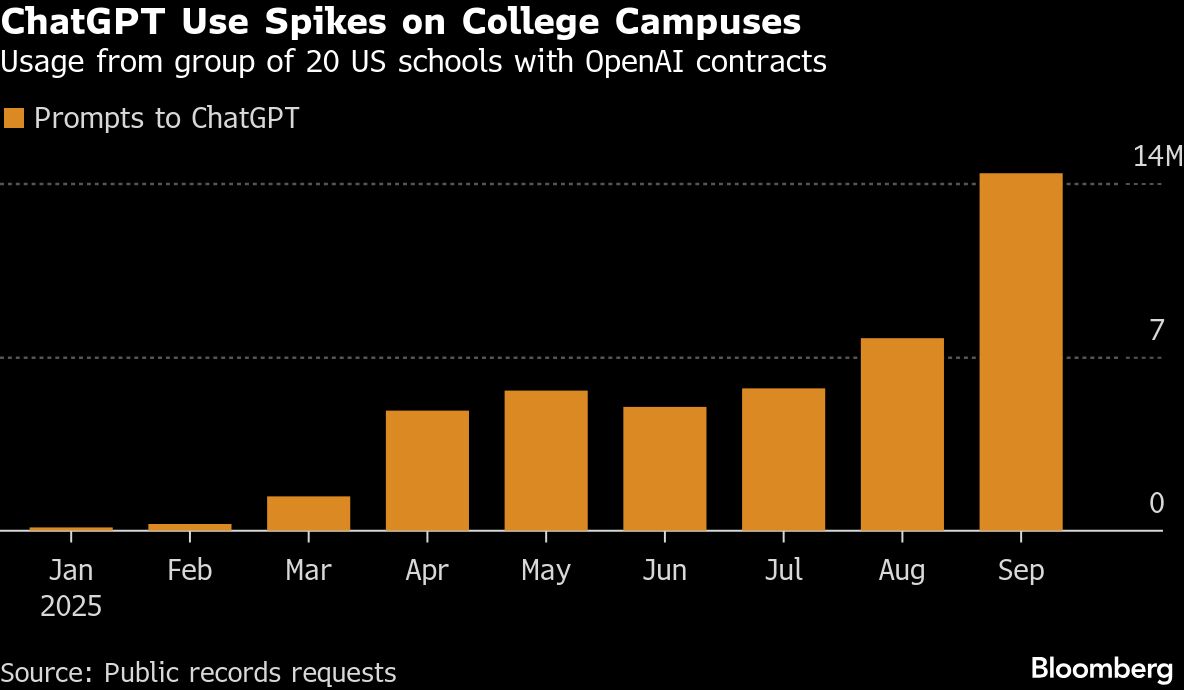
The scale of adoption is staggering. Data from 20 contracted campuses reveals students and faculty engaged with ChatGPT over 14 million times in a single month, averaging 176 interactions per user. This isn’t sporadic experimentation; it’s integration into the daily workflow for writing, data analysis, and research. While private university data is shielded, OpenAI’s global figure of “well over a million” academic licenses suggests this is a systemic shift, not an isolated trend.
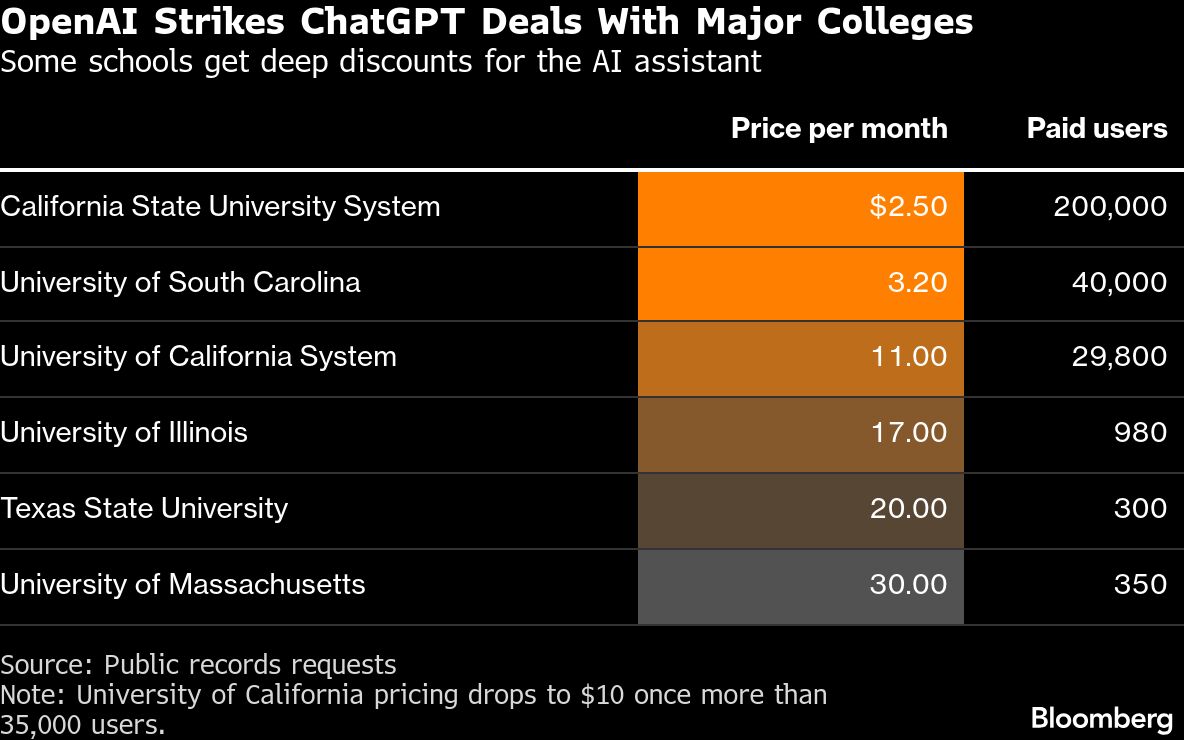
The financial mechanics of this land grab are a key to its success. OpenAI is employing aggressive, bulk-licensing discounts that are difficult for competitors to match. Schools are paying a few dollars per user monthly—a stark contrast to the standard $20 individual fee or the $60 corporate rate. The California State University system’s deal, covering 500,000 people for $15 million annually, breaks down to a mere $2.50 per user per month. When Microsoft quoted $30 per user for Copilot—twelve times the effective ChatGPT rate—the economic choice became clear for budget-conscious administrators. This pricing isn’t just competitive; it’s a deliberate barrier to entry for rivals.
This represents a profound philosophical reversal in academia. Initially met with bans and plagiarism fears, generative AI has undergone a rapid journey from perceived threat to essential utility. The turning point was a pragmatic realization: prohibition was futile, and the labor market’s demands were immutable. “Employers expect and need a labor force that knows how to work with these tools,” notes Anne Jones of Arizona State University, capturing the new consensus. The challenge shifted from blocking AI to governing its use—distinguishing between its role as a “thought partner” for brainstorming and a problematic “answer machine” that stifles learning.
OpenAI’s tailored outreach has been meticulous. The company hired education-specific sales teams, poached executive talent from Coursera, deployed student ambassadors, and made ChatGPT free during critical exam periods. This isn’t a passive sales strategy; it’s a full-spectrum campaign to embed the tool into the academic culture. Meanwhile, Microsoft, despite its deep legacy in productivity software, faces an uphill battle. Its strength in corporate environments doesn’t directly translate to campuses, where Google’s ecosystem holds significant sway and student preference for ChatGPT’s interface and capabilities is a powerful force.
Campus offensive
Yet, beneath the surge of adoption lies a deep undercurrent of caution and unresolved questions. Institutions like the University of Illinois are deliberately forgoing bulk discounts to signal they are proceeding thoughtfully, addressing faculty concerns over academic integrity and data security. Research initiatives, such as the $50 million effort at Bowdoin College led by Professor Eric Chown, aim to critically assess AI’s true pedagogical value. Early data suggests efficiency gains—saving users 1-5 hours weekly on tasks like writing and lesson planning—but whether AI enhances deep learning and critical thinking remains an open, and urgent, inquiry.
The competitive landscape is dynamic. Google is countering with aggressive offers, providing its pro-tier Gemini assistant free for a year to students and deploying free tiers in massive K-12 districts like Miami-Dade. Microsoft has responded with price cuts for academia, lowering Copilot from $30 to $18 per month. Real-world usage data, however, reveals a strong user preference: at Texas State University, ChatGPT usage was double that of Copilot, even when the latter was freely available, highlighting the gap between availability and active choice.
ADVERTISEMENT
CONTINUE READING BELOW
The long-term implications extend far beyond campus. By winning the student population, OpenAI is effectively conducting a multi-year training program for its future enterprise customer base. The familiarity and fluency developed during all-night study sessions and research projects will naturally translate into workplace preferences. Furthermore, federal policy is beginning to incentivize this adoption, with new grant priorities earmarking funds for expanding AI access in education, signaling official endorsement of this technological integration.
In conclusion, OpenAI’s early lead in education is a product of a perfect storm: viral product popularity, strategically untenable pricing for competitors, a swift pivot in academic mindset from resistance to management, and a targeted outreach campaign. While Google and Microsoft are formidable rivals with deep pockets and existing integrations, the battle is for user habit and affinity—a battle currently being won one essay draft and data analysis at a time. The university quad has become the proving ground where the dominant AI platform of the next decade is being chosen, not by CIOs, but by students.
© 2025 Bloomberg
Follow Moneyweb’s in-depth finance and business news on WhatsApp here.