

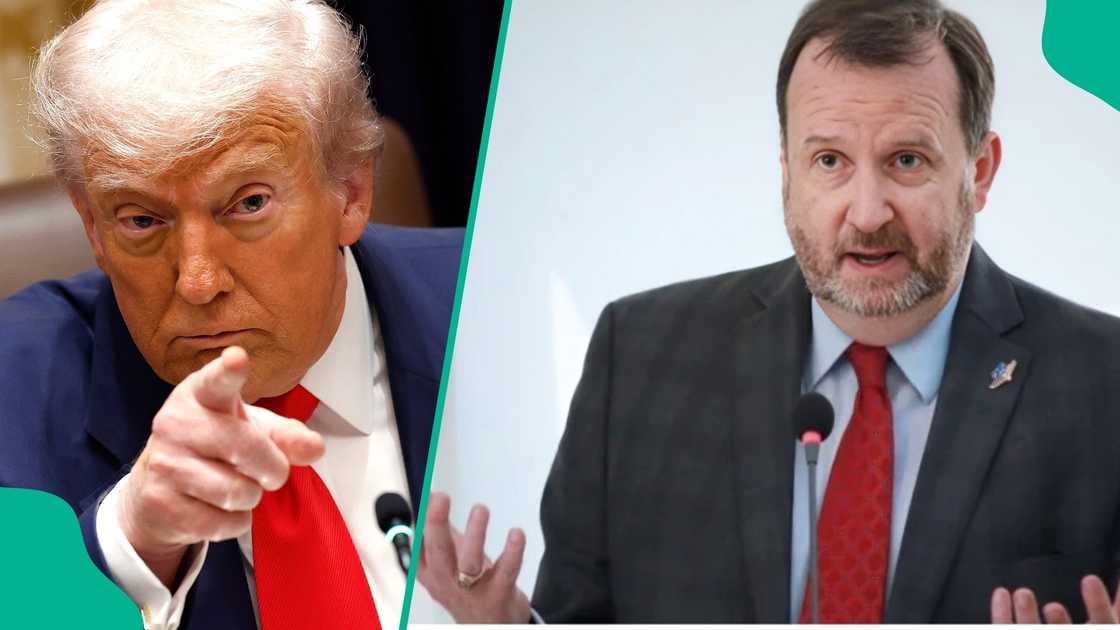
In a significant move impacting global diplomacy, the administration of U.S. President Donald Trump has initiated a widespread recall of American ambassadors, including Ambassador Richard Mills from Nigeria. This action is not an isolated incident but part of a broader, strategic reassessment of U.S. diplomatic presence across more than two dozen nations, with Africa bearing the brunt of the changes.
Source: UGC
This diplomatic shake-up sees Nigeria among 15 African countries—including strategic partners like Egypt, Senegal, and Rwanda—whose U.S. ambassadors have been recalled. The list extends to nations in the Asia-Pacific region, Europe, and the Western Hemisphere, indicating a global recalibration rather than a region-specific policy shift.
Nigeria among 15 African countries affected
Context and Precedent: Beyond a Simple Recall
To understand the weight of this action, it’s crucial to distinguish between standard diplomatic procedure and a political recall. Ambassadors typically serve at the pleasure of the sitting president, and it is not uncommon for a new administration to replace political appointees. However, this recall is notable for its scale and for including career Foreign Service Officers—diplomats like Richard Mills—who had already survived an initial review and were confirmed under the previous administration. According to State Department sources, these diplomats were notified their tenures would end in January and are being offered reassignment opportunities in Washington, D.C., preserving their careers within the foreign service.
The Nigeria-U.S. Relationship: A Complex Backdrop
The recall of Ambassador Mills occurs against a nuanced and occasionally tense bilateral landscape. Nigeria is the United States’ second-largest trading partner in Africa and a critical ally on regional security, particularly in combating terrorism in the Sahel. However, recent friction points include:
- Visa Policies: The Trump administration’s recent imposition of visa restrictions on Nigerians has been a significant irritant, framed by the U.S. as a response to information-sharing deficiencies on security and immigration matters.
- Security Cooperation: Paradoxically, both nations were reportedly close to finalizing a “strategic security framework” to enhance counter-terrorism collaboration in West Africa, a priority for both governments.
- Diplomatic Engagement: Just prior to the recall, Ambassador Mills was actively engaged in high-level talks, including a meeting with Nigeria’s Foreign Minister, Yusuf Tuggar, to strengthen partnership initiatives.
This juxtaposition of cooperation and tension makes the recall particularly significant, signaling a potential reevaluation of how the U.S. manages this pivotal relationship.
Chiefs of mission informed of tenure endings
Interpreting the Strategic Signal
Large-scale diplomatic reshuffles are rarely administrative. They serve as a clear signal of a president’s foreign policy priorities and preferred methods of engagement. The concentration of recalls in Africa suggests a continent-wide reassessment. Potential interpretations include:
1. A Shift to Transactional Diplomacy: Replacing career diplomats may pave the way for envoys who prioritize specific, deal-oriented outcomes over long-term relationship building.
2. Realignment of Priorities: The move may indicate which bilateral relationships the administration views as most critical, with vacant posts potentially awaiting new ambassadors with focused mandates.
3. Centralization of Policy: Recalling ambassadors can centralize foreign policy control within the White House and State Department in Washington, reducing the autonomy of on-the-ground missions.
Ambassador Mills confirmed last May
What Happens Next? The Practical Implications
For the affected countries, an ambassador recall creates a period of diplomatic uncertainty. While embassies continue to function under the charge d’affaires (the deputy chief of mission), the absence of a Senate-confirmed ambassador can slow high-level negotiations and diminish a country’s profile in Washington’s eyes. For Nigeria, a major power in Africa, this interim period will test the resilience of institutional ties beyond personal diplomacy.

This diplomatic reset coincides with other stringent U.S. immigration actions, such as the pausing of green card and naturalization applications for nationals from 19 banned countries—a policy that underscores a broader trend toward restrictive border and immigration controls.
Recalled ambassadors not losing foreign service jobs
In conclusion, the recall of the U.S. Ambassador to Nigeria is more than a personnel change. It is a noteworthy event within a sweeping global diplomatic reset, reflecting the Trump administration’s intent to imprint its distinct style on foreign engagement. The long-term impact on U.S.-Nigeria relations will depend on who is appointed as a successor, the mandate they are given, and how both nations navigate this transitional phase in their complex and interdependent partnership.