

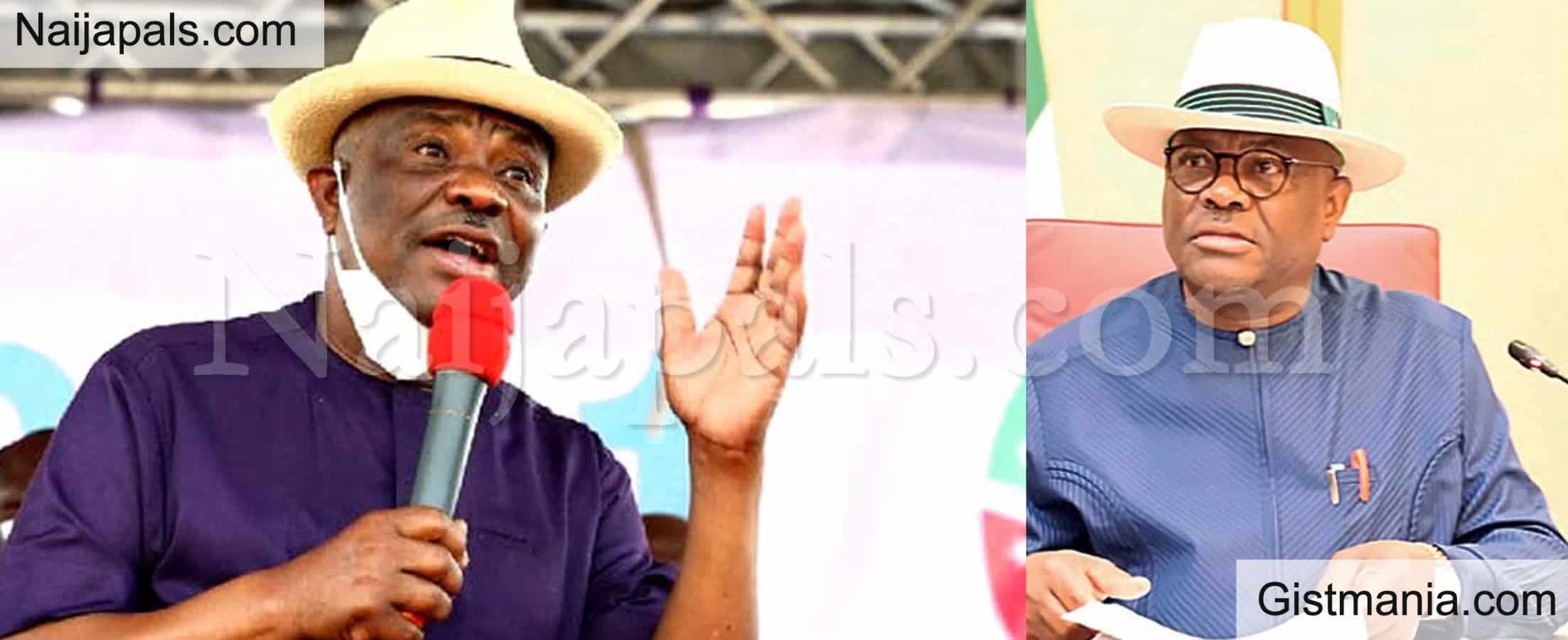
In a revealing public address that blended personal grievance with strategic political signaling, Nyesom Wike, the Minister of the Federal Capital Territory, positioned himself at the center of Nigeria’s contentious political landscape. Speaking at a thanksgiving service in Rivers State, Wike made two significant declarations: first, a self-assessment as the nation’s “most abused politician” after President Bola Tinubu, and second, the official start date for the next political season in Rivers State—January 2026.
This timeline is not arbitrary. In Nigerian politics, declaring the “start” of activities over two years in advance is a classic power move. It serves to freeze the field, discourage premature defections, and centralize campaign planning and resource allocation under Wike’s influence. It signals to allies and opponents alike that the machinery for the next electoral cycle—likely for the 2027 general elections—is already being primed under his direction.
**The Anatomy of “Abuse” and the Currency of Loyalty**
Wike’s claim of being a top target for political abuse is a badge of honor in the rough-and-tumble world of Nigerian politics, where visibility often correlates with influence. His explanation points to a core principle he champions: the sanctity of political agreements. Wike framed his frequent controversies not as failures, but as a consequence of demanding accountability and refusing to be “used” by fair-weather allies. This narrative builds his image as a principled, if combative, dealmaker—a crucial reputation for someone who needs to broker complex alliances.
His unwavering proclamation of loyalty to President Bola Tinubu was the cornerstone of his speech. This serves multiple purposes: it solidifies his standing within the ruling All Progressives Congress (APC) at the national level, and it draws a stark contrast with what he termed latecomers to Tinubu’s support. By praising the Rivers electorate for their early and decisive backing of Tinubu in the 2023 elections, Wike subtly questions the legitimacy and value of support from recent converts. This is a potent message intended to sideline rivals within Rivers State who may have joined the APC bandwagon after Tinubu’s victory.
**The Subtext: A Warning Shot Across the Bow**
Beneath the gratitude and reaffirmations lay a clear warning. When Wike stated that his camp “would not be taken for granted,” he was addressing internal party dynamics. He was likely referencing perceived slights or power-sharing agreements he feels are being undermined. In Nigerian political parlance, this is a direct assertion that his bloc expects its due rewards—influence, appointments, and control over the party structure in Rivers—in exchange for delivering votes. Failure to respect these unwritten pacts, he implies, could lead to instability or a rupture within the party’s state chapter.
**The Local Anchor: Development as Political Capital**
The event itself, hosted by former Deputy Speaker Chibudom Nwuche, was strategically significant. Nwuche’s praise for Wike’s developmental work in the Ekpeye Kingdom, particularly in elevating traditional institutions, was not mere ceremony. It highlighted Wike’s most durable political asset: a legacy of tangible, localized projects and empowerment from his tenure as Governor. This “stomach infrastructure” and recognition of traditional authority create a deep reservoir of goodwill that transcends fleeting political squabbles. It reminds the audience that Wike’s influence is rooted in more than just rhetoric; it’s built on perceived dividends delivered to communities.
**Looking Ahead to 2026**
Wike’s speech was less about the past and more about meticulously setting the chessboard for the future. By naming January 2026, claiming the mantle of the abused but steadfast loyalist, and issuing a veiled warning, he has fired the opening salvo in the long campaign for control of Rivers State. His strategy appears to be a pincer movement: leveraging his national connection to Tinubu to bolster his status locally, while using his entrenched local support to reinforce his indispensability nationally. The coming months will reveal how his rivals and allies within the complex ecosystem of Rivers politics respond to this early and calculated display of strength.