

The Transitional Legislative Assembly of Burkina Faso has charted a decisive course for the nation’s future, adopting a 3,431 billion CFA franc finance law for 2026. This budget, passed on December 27, 2025, represents a critical balancing act between urgent security imperatives and long-term economic revitalization in a nation navigating a complex transition.
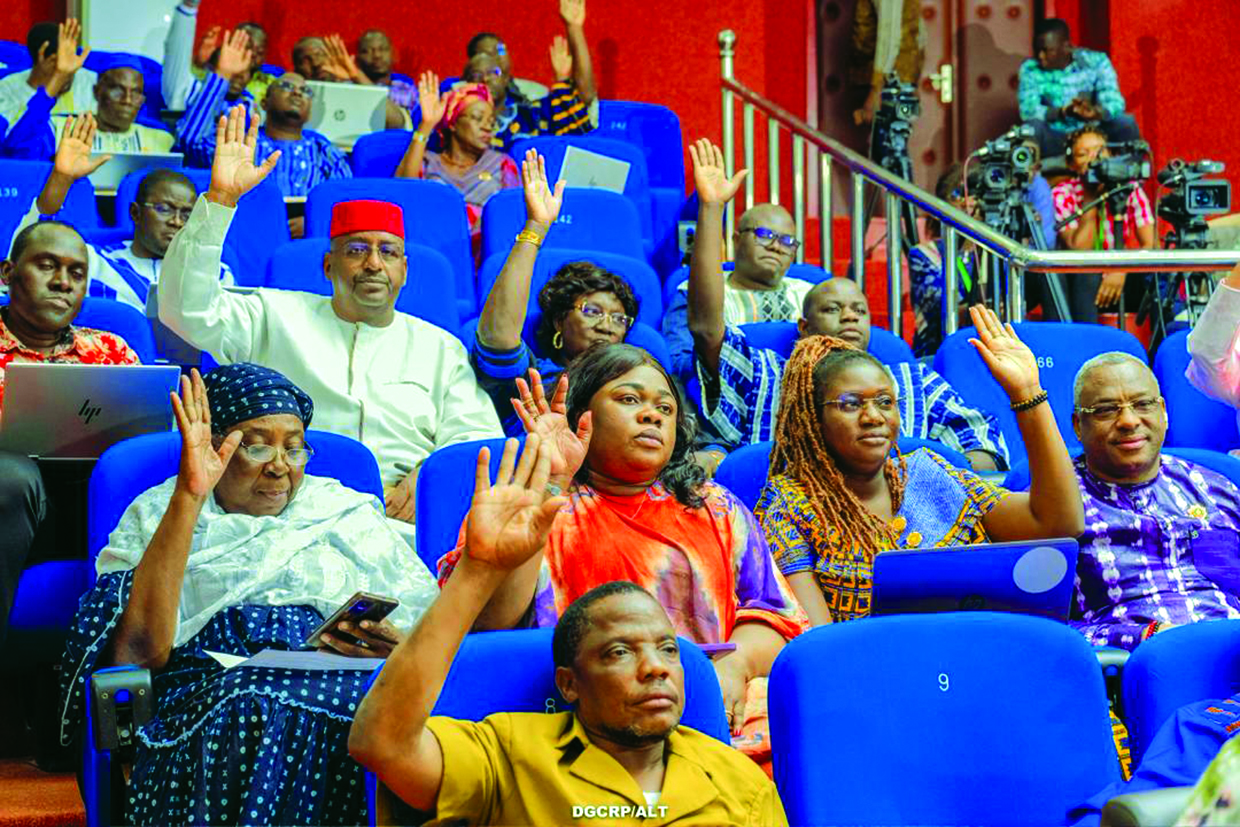
After nearly eight hours of deliberation, lawmakers endorsed a budget where projected revenues of 3,431 billion CFA francs meet expenditures of 3,918 billion, leaving a calculated deficit of 486 billion. Finance Minister Aboubakar Nacanabo was quick to contextualize this gap: “The notable fact is that the deficit level has decreased. It is lower than the 3% rate set as the reference standard within WAEMU [the West African Economic and Monetary Union].” This adherence to regional fiscal norms is a significant signal of macroeconomic discipline to international partners and investors, suggesting a commitment to stability despite profound challenges.
The 2026 budget is explicitly framed as an instrument of dual mobilization: continuing the military and security reconquest of national territory while simultaneously jumpstarting the crippled economy. This is not merely an accounting exercise but a statement of national priorities. As Minister Nacanabo outlined, the core guidelines are achieving food self-sufficiency—a critical goal for a nation facing displacement and supply chain disruptions—and concretely developing human capital. These are the foundational pillars upon which lasting stability is built.
Strategic Allocation: Reading Between the Budget Lines
The true narrative of a nation’s priorities is told in the breakdown of its budget. Here, Burkina Faso’s allocations are stark and strategic:
- Defense & Security (Over 24%): This commanding share underscores the existential nature of the security crisis. It funds not just military operations but likely encompasses support for the Volunteers for the Defense of the Homeland (VDP), intelligence, and border security—the essential preconditions for any other development.
- Education & Human Capital (Over 20%): This substantial investment is a bet on the future. In a country with a very young population, it aims to rebuild and secure the education system, develop vocational skills, and create a capable workforce for the post-conflict economy.
- Health (Over 12%): This allocation addresses both immediate humanitarian needs from displacement and the long-term imperative of a resilient public health system, a lesson underscored by recent global pandemics.
- Agriculture & Rural Sector (~6%): While a smaller percentage, its strategic importance is immense. This funds the “agro-pastoral and fisheries offensive” crucial for food sovereignty, reducing import dependency, and revitalizing the rural economy where most Burkinabè live.
Minister Nacanabo revealed a crucial enabler for these investments: “budgetary savings have improved by over 600 billion CFA francs.” This suggests aggressive rationalization of non-essential operating expenses, freeing up unprecedented resources for capital projects. The focus, he stated, will now shift to public procurement, demanding efficiency and quality from executing companies.
A Strategic Allocation of the Budget for Essential Sectors
The Economic Vision: Deflation, Growth, and Wealth Creation
Beyond the allocations, the budget projects a cautiously optimistic economic trajectory. Burkina Faso experienced a rare phenomenon in 2025: deflation of 0.5%. For 2026, the government forecasts minimal inflation (not exceeding 0.2%). While low prices can benefit consumers, sustained deflation can signal weak demand; thus, the government’s challenge is to stimulate growth without triggering harmful inflation.
The growth targets are ambitious: 6.3% in 2025 accelerating to 6.6% in 2026. Achieving this in a conflict environment requires the budget’s investments to translate quickly into productive activity. A key focus, as mentioned by the Minister, is industrialization to boost the secondary sector’s contribution to GDP—moving beyond raw material extraction to value-added processing and job creation.
Conclusion: A Budget of Ambition and Necessity
The 2026 finance law is more than a fiscal plan; it is a manifesto for national survival and renewal. It attempts to fund the gun and the ploughshare simultaneously, under the tight constraints of a deficit framework. Its success hinges on effective implementation—transparent procurement, efficient project execution, and continued domestic revenue mobilization. The government’s acknowledgment of relevant amendments from the Assembly hints at a collaborative scrutiny process, which is vital for accountability. As Burkina Faso steps into 2026, this budget defines the high-stakes pathway toward security, self-reliance, and sustainable development for its people.
Evariste YODA