

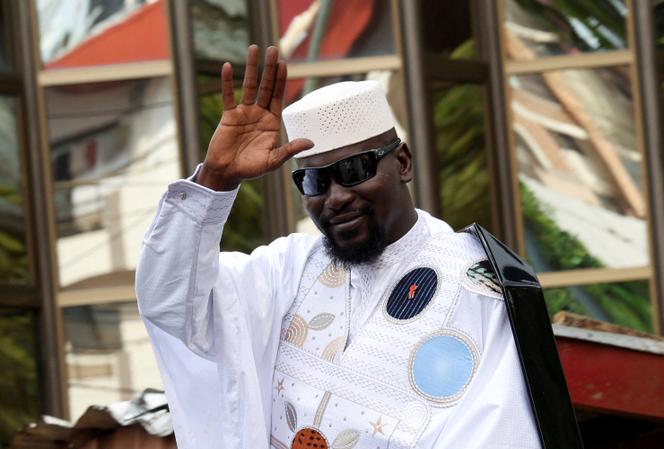
Guinea’s political landscape has been formally reshaped, but the process raises profound questions about democratic transitions in an era of resurgent authoritarianism. On Tuesday, December 30, General Mamadi Doumbouya, the junta leader who seized power in a 2021 coup, was declared the winner of a presidential election with 86.72% of the vote. This result, while statistically overwhelming, was a foregone conclusion in a contest where the major opposition figures were either in exile or barred from participating, and where political freedoms have been systematically curtailed.
The election, intended to mark a return to constitutional order, instead appears to have cemented a shift from military to civilian-authoritarian rule. Some 6.8 million Guineans were called to the polls, but they faced a ballot devoid of genuine political alternatives. Doumbouya’s eight opponents were largely unknown, with the runner-up, Abdoulaye Yéro Baldé of the Democratic Front of Guinea (Frondeg), securing only 6.59%. The reported 80.95% turnout, though high, is a contested figure in an environment where independent verification is nearly impossible and a boycott was actively promoted by the exiled opposition.
“Election sham”
The context of this vote is critical to understanding its outcome. The opposition, including former President Alpha Condé and prominent leaders like Sidya Touré and Dalein Diallo, labeled it an “election sham” and an “electoral masquerade.” Their critique is rooted in a four-year transition period marked by a severe crackdown: protests have been banned since 2022, political parties suspended, and civil society leaders subjected to arrest, conviction, or forced exile. Reports of kidnappings and forced disappearances, noted even by international observers, have created a climate of fear that stifles dissent.
International reaction presents a stark contradiction. While the African Union’s observer mission praised the vote as “credible” and held “calmly,” proposing a review of sanctions, it simultaneously acknowledged the dire human rights situation. This duality highlights a pragmatic, and often criticized, approach by regional bodies that prioritizes stability and engagement over democratic principles, especially when dealing with regimes that maintain cooperative foreign policies. Unlike the junta-led states of Mali, Burkina Faso, and Niger, which have expelled French influence, Doumbouya’s Guinea has carefully preserved relations with Paris and other international partners, likely insulating it from more severe condemnation.
Iron grip
The legal pathway for Doumbouya’s candidacy was laid months earlier. A constitutional referendum in September, which officially saw 91% approval, introduced a new fundamental law. This document performed two crucial functions: it permitted members of the junta to stand for election, and it extended the presidential term from five to seven years, renewable once. This move is a classic tactic of “constitutional coups,” where legal frameworks are rewritten to legitimize and entrench the power of incumbent authorities.
For Doumbouya’s supporters, the legitimacy argument hinges not on democratic process but on economic promise and a break from the past. They point to the launch of the massive Simandou iron ore project in November, a deposit of global significance that could transform state revenues. This taps into a deep-seated frustration with the previous regime’s failure to translate Guinea’s immense mineral wealth—it is the world’s top bauxite exporter—into broad-based prosperity. Over half the population still lives in poverty, a stark reality that fueled the initial support for Doumbouya’s 2021 coup against Alpha Condé, who had himself manipulated the constitution for a controversial third term.
The subdued public reaction in Conakry to the election result speaks volumes. It reflects not necessarily popular acclaim, but a weary public resignation and an awareness of the risks associated with protest. Guinea’s election fits a disturbing continental pattern observed in 2025, where incumbents in Cameroon, Côte d’Ivoire, and Tanzania secured victories in votes characterized by the exclusion of credible opposition and shrinking civic space.
In essence, Guinea has not experienced a transition *from* military rule, but a transition *of* military rule into a new, constitutionally-clad form. The Supreme Court’s impending ratification of the results will provide a final legal veneer. The true test for General-President Doumbouya will be whether his promised economic dividends materialize for the impoverished populace, and whether the international community’s pragmatic engagement evolves into pressure for genuine political liberalization, or mere acceptance of a new authoritarian status quo.