

The recent announcement by the Presidency of the Refoundation of the Republic of Madagascar (PRRM) to address the toxic underbelly of social media is a declaration that warrants both cautious approval and profound scrutiny. The stated goals—curbing rampant insults, incitement to hatred, and attacks on the hasina (a profound Malagasy concept encompassing the sacred dignity, prestige, and legitimate authority of leaders)—are, on their face, universally laudable. In any society aspiring to function, online or off, freedom of expression is not, and has never been, an absolute right without boundaries. It is inherently framed by laws designed to protect individuals from defamation, communities from violence, and the state from genuine threats to security. The principle that one’s freedom ends where another’s begins is the bedrock of social contract theory, from John Stuart Mill to modern constitutional democracies.
The current digital landscape in Madagascar, as described, reflects a global pathology amplified by local political strife. The anonymity and reach of platforms like Facebook have fostered a culture where political discourse has been weaponized. Insults, slander, and calls to violence have become commonplace tools not for debate, but for the deliberate delegitimization of President Andry Rajoelina and his administration. This environment has allowed so-called “influencers” to trade in vitriol for clicks and relevance, mistaking the cowardice of anonymous attacks for courage. As the article rightly notes, an insult is not an argument; it is the failure of one. A cleanup is undeniably overdue to restore a minimum baseline of civility necessary for any meaningful national dialogue.
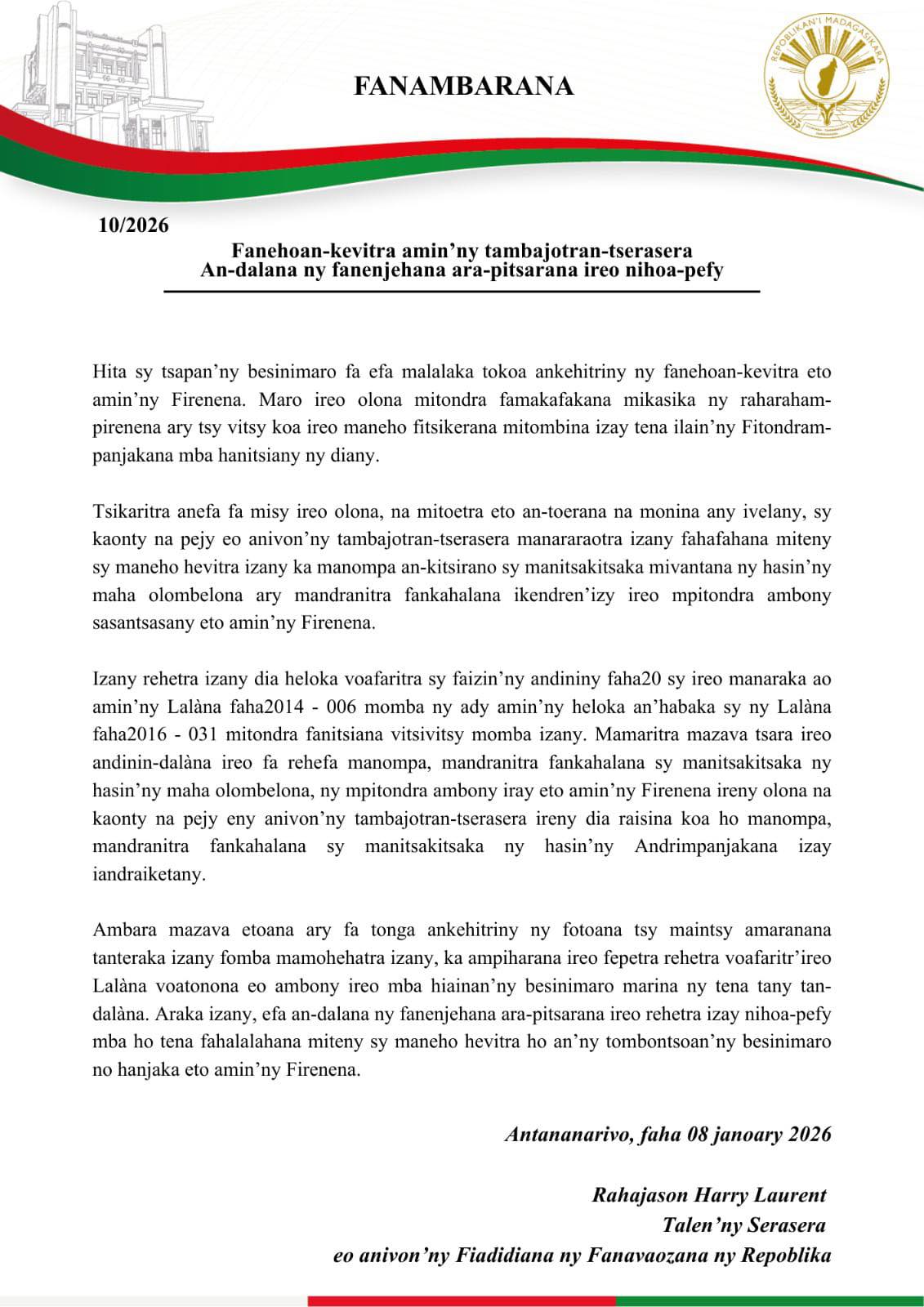
However, the devil—and the potential for authoritarian overreach—lies in the details. History, in Madagascar and globally, offers a clear warning: laws enacted to protect order and dignity can swiftly become tools for silencing dissent and entrenching power. The critical test for the PRRM’s initiative will be its impartial application. Will measures target only those attacking the current regime, as has been alleged in the past, or will they equally sanction government supporters who launch reprehensible attacks against political rivals? A “totem of immunity” for pro-regime voices would render the entire effort a cynical exercise in political control, not societal improvement.
The most complex and dangerous ambiguity rests in the prohibition of attacks on hasina. This is not merely a legal term but a cultural and spiritual one, making its legal definition perilously subjective. Where is the line between a legitimate, if harsh, critique of a leader’s performance and an unlawful attack on their inherent dignity? The article provides potent, real-world examples: labeling a president a “narcissistic megalomaniac” or a “waster of public funds.” Are these insults, or are they political judgments (however blunt) about observable behavior and policy outcomes? The risk is that any criticism that causes discomfort or challenges authority could be construed as an attack on hasina. We have seen this slippery slope before: the criminalization of a displeasing t-shirt, a thumbs-down gesture, or a satirical Facebook post under the guise of protecting state security. Such actions betray an arrogance of power that ultimately undermines the very legitimacy and hasina leaders seek to protect.
Therefore, the world will be watching where the “colonels’ regime” sets the bar. The democratic report card, as noted, currently reads “could do better.” A genuine commitment to cleaning up social media must be paired with a demonstrable tolerance for robust, lawful criticism. The single promising sign in the PRRM’s statement is the acknowledgment that criticism is useful for course correction—a foundational concept of accountable governance. Yet, these are the words of a political operative, Harry Laurent Rahajason. In politics, actions are the only reliable currency.
The path forward requires transparent, narrowly-tailored laws, independent judicial oversight, and a consistent enforcement standard that protects citizens from harm without shielding leaders from accountability. The goal should not be a sanitized, praise-only digital sphere, but a vibrant one where debate is fierce yet civil, where hasina is respected but not used as a shield against scrutiny. The cleanup is necessary, but its execution will reveal whether the aim is a healthier democracy or a quieter opposition.