

Kenya’s Toothless Response to U.S. Tariffs: A Missed Opportunity for Strategic Trade Policy
Kenya’s Reactive Stance on U.S. Tariffs
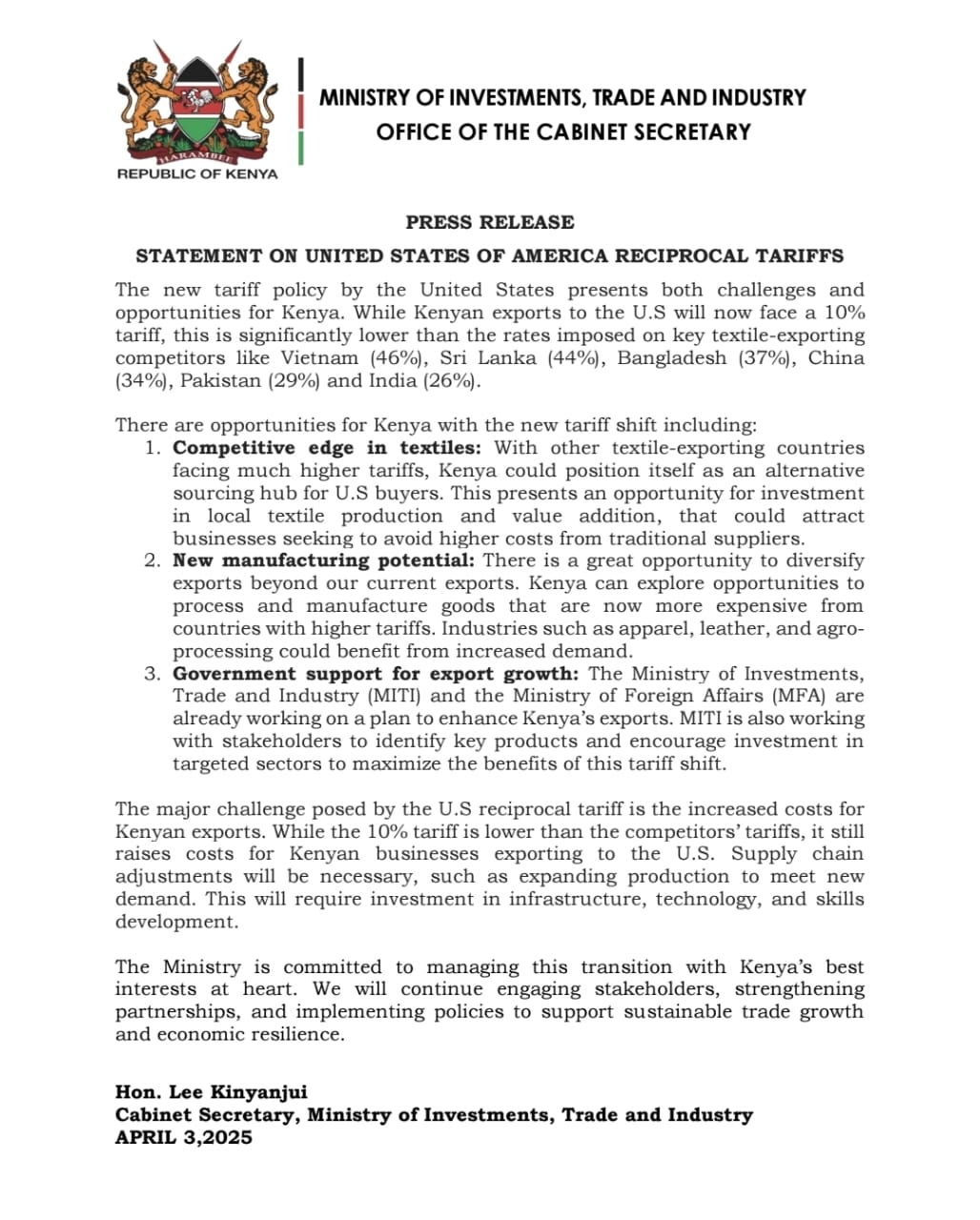
The Kenyan government’s response to the recent 10% U.S. tariff on exports reveals a concerning lack of strategic vision in trade policy. While the tariff appears moderate compared to higher rates imposed on Vietnam (46%) and Sri Lanka (44%), its impact on Kenyan exporters could be devastating. Even small tariff shifts can dramatically alter global supply chain decisions, yet the Ministry’s response focuses on relative comparisons rather than concrete solutions.
The Illusion of Opportunity in Protectionism
Cabinet Secretary Lee Kinyanjui’s framing of the tariff as an “opportunity” dangerously ignores the fundamental nature of protectionist measures. Tariffs distort comparative advantage and disproportionately affect smaller economies like Kenya’s. The Ministry’s optimistic rhetoric fails to address the real challenges facing Kenyan exporters.
Structural Challenges in Kenya’s Export Sector
The suggestion that Kenya can leverage its textile industry overlooks decades of underinvestment. According to the Kenya Association of Manufacturers, textile exports suffer from:
- High electricity costs
- Logistics inefficiencies
- Bureaucratic red tape
Without addressing these fundamental issues, Kenya cannot realistically compete as an alternative supplier to U.S. markets.
Missed Opportunities in African Trade Integration
The Ministry’s response glaringly omits any mention of the African Continental Free Trade Area (AfCFTA). In 2023, only 17% of Kenya’s exports went to African neighbors, despite the massive potential of South-South trade. Kenya should be strengthening ties with Ethiopia, DRC, and Nigeria rather than scrambling to maintain access to volatile U.S. markets.
The Need for Concrete Policy Action
Kenya’s trade policy lacks:
- Clear industrial strategy
- Support mechanisms for affected exporters
- Digital trade initiatives
- Green manufacturing plans
The government must move beyond stakeholder meetings and buzzwords like “value addition” to implement real reforms in infrastructure, power, and logistics.
Time for Radical Economic Thinking
As other African nations like Rwanda, Ghana, and Ethiopia implement bold trade strategies, Kenya risks being left behind. The country needs:
- A pan-African supply chain strategy
- Urgent industrial reforms
- Clear trade philosophy
The current response demonstrates a troubling disconnect between policymakers and the realities facing Kenyan exporters operating on razor-thin margins.
Related Articles
How Ruto’s Government Is Undermining Kenyan Farmers
This article summarizes an original report. Read the full analysis here.