

Since the outbreak of civil war in Sudan in April 2023, Ethiopian Prime Minister Abiy Ahmed has adhered to a single, overriding strategic doctrine: avoid escalation with Sudan’s de facto leader, General Abdel Fattah Abdelrahman Al-Burhan, at all costs. This is not mere rhetoric but a calculated posture of restraint. “We will not settle our border disputes through violence,” Abiy declared before Parliament in July 2024, a statement whose necessity reveals the underlying volatility. “Ethiopia does not intend to take advantage of Sudan’s misfortunes.” A year and a half into Sudan’s internal collapse, Addis Ababa continues to walk this diplomatic tightrope, balancing national interest against the profound risks of a two-front crisis.
Abiy’s repeated public assurances to his parliament are a telling signal. They underscore that beneath a public facade of neutrality and neighborly concern, a potent cocktail of historical grievances, strategic opportunism, and existential threats simmers. The relationship between these two East African giants is a case study in how dormant disputes can be reactivated by regional instability. Every element for a major interstate conflict is present: a contested border, water resource tensions, proxy war dynamics, and the profound insecurity born from both nations’ internal conflicts.
The most immediate flashpoint remains the Al-Fashaga triangle, a 250 km² region of fertile agricultural land whose ownership has been disputed since Sudanese independence in 1956. The historical border demarcation was ambiguous, but a fragile status quo held for decades. This changed dramatically in 2020. As Ethiopia became consumed by the Tigray War, Khartoum saw a strategic opening. The Sudanese Armed Forces (SAF) moved to reclaim the territory, evicting Ethiopian farmers and militarily occupying the area. This was a classic opportunistic land grab, exploiting a rival’s moment of domestic weakness to settle a long-standing claim.
The subsequent militarization of Al-Fashaga by Sudan created a permanent point of friction. However, the outbreak of Sudan’s own civil war in 2023 between the SAF and the paramilitary Rapid Support Forces (RSF) paradoxically imposed a temporary restraint. The Sudanese army, now fighting for its survival against the RSF, cannot afford to open a second, full-scale front with Ethiopia. For Addis Ababa, the calculus is similarly complex. While reclaiming Al-Fashaga by force might be militarily feasible against a distracted Sudan, it would catastrophically legitimize the very principle of using force to settle borders—a precedent Abiy fears could be used against Ethiopia elsewhere. It would also instantly make Ethiopia a party to Sudan’s war, potentially aligning it against or with factions in ways that could backfire spectacularly.
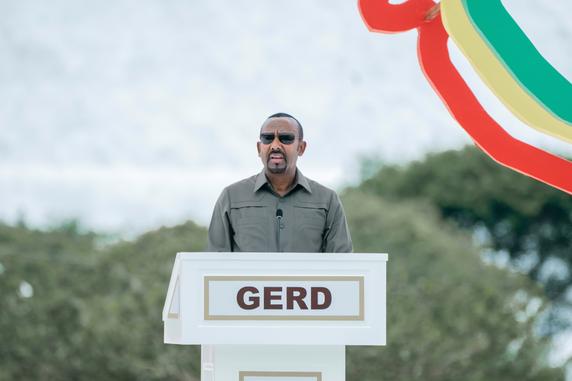
Yet, the border is only one layer of tension. The Grand Ethiopian Renaissance Dam (GERD) on the Blue Nile remains a profound, long-term strategic contention with downstream Sudan (and Egypt). Sudan’s position on the dam has fluctuated with its political leadership, but the essential anxiety over water control and agricultural dependency persists. Furthermore, the war in Sudan has introduced dangerous proxy dynamics. There are persistent, though unconfirmed, allegations from Khartoum that Ethiopia provides sanctuary or tacit support to RSF forces. Conversely, Ethiopia suspects Sudan of harboring or supporting factions hostile to Addis Ababa. This creates a shadow war beneath the official diplomacy, where each nation’s internal enemies can become the other’s strategic tools.
The fragile balance, therefore, is held in place not by trust or resolution, but by a mutual and overwhelming constraint: neither government can withstand another major war. Ethiopia is emerging from the devastating Tigray conflict, facing severe economic challenges, internal ethnic tensions, and a fragile federal compact. Sudan is a failed state in the making, with its army and main paramilitary force engaged in a fight to the death. Peace between them is less a positive achievement and more a negative necessity—a non-war sustained by mutual exhaustion and the terrifying prospect of mutual collapse. The true test will come when one, or both, of these internal pressures shift. For now, the silence on the border is the sound of two wounded giants carefully circling each other, each knowing that a push could bring them both down.