

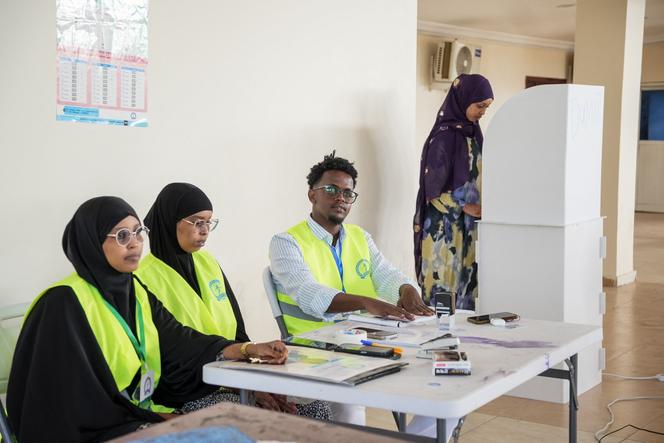
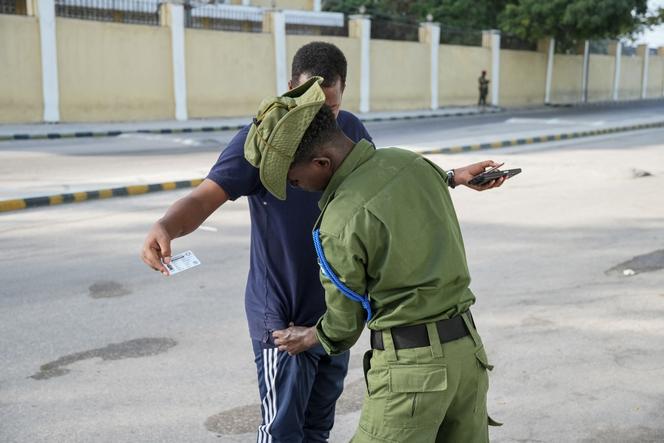
On Thursday, December 25, residents of greater Mogadishu are poised to participate in a historic, yet precarious, democratic exercise: the first local elections by direct suffrage in the Somali capital in nearly six decades. This event represents a profound shift from the indirect, clan-based electoral model that has defined Somali politics since the collapse of the state in 1991. The government has announced a massive security deployment of over 10,000 personnel, a stark acknowledgment of the persistent threat posed by Al-Shabaab, the Al-Qaeda-linked insurgency it has battled since 2006.
The timing of this vote is critical, occurring against a backdrop of significant military setbacks. The war against Al-Shabaab, far from being won, has intensified. Insurgents have recaptured more than 200 villages within 60 kilometers of Mogadishu this year alone, effectively erasing most of the territorial gains made during a major government offensive in 2022-2023. This underscores the fragile security environment in which the election is taking place—a democratic experiment conducted within a shrinking zone of state control.
Authorities claim a significant 86% reduction in attacks in the capital, attributing it to enhanced surveillance cameras, checkpoints, and plainclothes police. However, this statistic is challenged by a series of high-profile security breaches in the past six months, including a failed attack on the presidential convoy, shelling near the heavily fortified airport zone, and an assault on a detention center. These incidents reveal the insurgents’ enduring capacity to strike at the heart of the state’s security apparatus. In a drastic measure, the civil aviation authority has announced the closure of the country’s main airport on election day, highlighting the level of perceived threat.
A Historic Vote in a Tense Context
The electoral mechanics reveal both ambition and limitation. Nearly 400,000 voters are registered in the Banaadir region—home to over 2 million people—who will choose among 1,600 candidates for 390 local council seats. The return to “one person, one vote” marks a symbolic break from the political system established after dictator Siad Barre seized power in 1969 and abolished direct voting. His overthrow in 1991 led not to democracy, but to a complex, clan-based power-sharing model (the “4.5 system”) designed to manage conflict but often criticized for entrenching elite patronage and excluding the public.
This pilot election in Mogadishu is widely viewed as a crucial test for the scheduled 2026 national presidential election. However, its legitimacy is immediately undercut by a major boycott from opposition parties, who accuse President Hassan Sheikh Mohamud’s federal government of orchestrating “unilateral electoral processes” to consolidate power. Analysts note this move follows a pattern seen in other Somali regions; the semi-autonomous state of Puntland experimented with universal suffrage in May 2023 only to later abandon it, while the separatist region of Somaliland has maintained its own direct electoral system since 1991 without international recognition.
The federal government approved the return to direct suffrage in August 2024, a decision many perceive as a strategic gambit by President Mohamud to extend his influence and potentially his rule beyond 2026. The election has already been postponed three times this year, raising questions about administrative readiness and political will. While the chairman of the Somali electoral commission, Abdikarim Ahmed Hassan, hailed it as a “great moment for the Somali people,” detailing plans for voter transport and traffic restrictions, independent observers express deep skepticism.
Security analyst Samira Gaid describes an “orchestrated” process designed to create an illusion of democracy, lamenting that “civilian participation is almost non-existent.” This critique is echoed in a September note from the International Crisis Group, which draws parallels to the severe political crisis of 2021 under former President Mohamed Abdullahi “Farmaajo.” Then, a failure to hold elections led to violent clashes between clan factions. As the 2026 deadline approaches, a dangerous stalemate is forming: no consensus exists on the electoral model for the national vote, and the opposition threatens to organize a parallel process if the government insists on a direct vote.
Thus, the Mogadishu local elections stand as a deeply contradictory milestone. They symbolize a long-awaited return to foundational democratic principle after generations of conflict and clan-based governance. Yet, they are conducted under the shadow of a resurgent insurgency, amid a boycott that strips them of broad political legitimacy, and as a potential catalyst for greater national discord. The true test will not be whether the polls open on December 25, but whether this process leads to genuine, inclusive political renewal or becomes merely a tactical maneuver in Somalia’s protracted struggle for stable and accountable governance.