

Al-Shabaab Attacks Military Base Near Kismayo Airport, Reveals US Troop Presence in Somalia
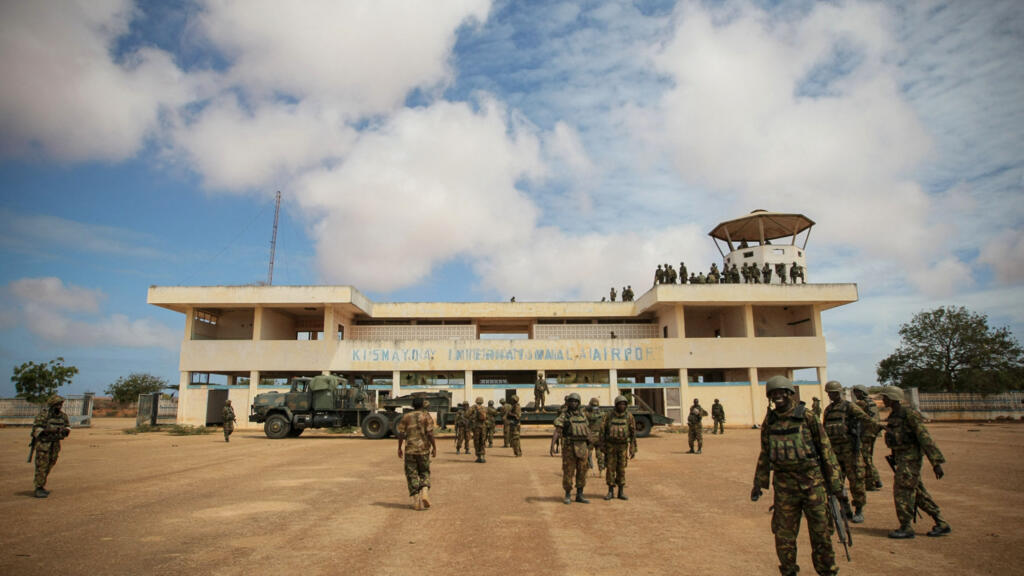
In a brazen assault that underscores the persistent threat of terrorism in the Horn of Africa, the militant group al-Shabaab launched an attack on a military base near Kismayo Airport in southern Somalia on Thursday. The incident, which took place in the strategic port city, has drawn international attention not only for its timing but also for what it reveals about foreign military involvement in the region.
Details of the Attack and Immediate Aftermath
According to the United States Africa Command (AFRICOM), which publicly confirmed the event, the attack did not result in any casualties. Al-Shabaab, an al-Qaeda-affiliated terrorist organization, has since claimed responsibility for the assault, framing it as a direct challenge to international forces operating in Somalia.
The targeted base is situated in close proximity to Kismayo Airport, a critical infrastructure point in Jubaland, a region frequently contested by federal forces, regional troops, and militant factions. Witnesses reported hearing explosions and sustained gunfire during the assault, though official sources emphasized that defensive measures successfully repelled the attackers.
“This was a coordinated attempt to destabilize the area and intimidate both local and international partners,” a security analyst familiar with the region stated. “The fact that no lives were lost speaks to the preparedness of the forces on the ground—but it also signals that al-Shabaab remains agile, determined, and capable of striking high-profile targets.”
Timing and Strategic Implications
The attack came just days after the new commander of AFRICOM, General Michael Langley, concluded an official visit to Mogadishu, where he met with Somali President Hassan Sheikh Mohamud and other senior officials. The timing of the assault is widely interpreted as a deliberate message from al-Shabaab, aimed at demonstrating its reach and resilience despite ongoing counter-terrorism operations.
More significantly, the attack has inadvertently revealed the presence of U.S. military personnel in the Kismayo area—a detail that had not been widely publicized prior to the incident. While the U.S. has maintained a limited and often discreet footprint in Somalia for years, this event brings renewed attention to the scope and nature of American engagement in the country.
“This isn’t just about al-Shabaab flexing its muscles,” noted Dr. Amina Warsame, a researcher specializing in East African security affairs. “It’s also about messaging. By attacking so soon after a high-level U.S. visit, and by explicitly referencing American troops in their claim, al-Shabaab is trying to shape narratives both locally and globally.”
U.S. Involvement and AFRICOM’s Role
AFRICOM has been actively involved in Somalia for over a decade, providing training, intelligence, and logistical support to the Somali National Army and African Union Transition Mission in Somalia (ATMIS) forces. Drone strikes and special operations missions have also been part of the U.S. strategy to degrade al-Shabaab’s capabilities.
However, the explicit confirmation of U.S. troops near Kismayo marks a subtle but important shift in public acknowledgment of their deployment patterns. In recent years, the U.S. has periodically adjusted its military presence in Somalia, reflecting broader geopolitical priorities and assessments of the threat environment.
“The U.S. has consistently stated its commitment to supporting Somali-led security efforts,” a Pentagon spokesperson said in a background briefing. “Our presence is conditions-based and aimed at enabling local forces to take the lead in combating terrorism.”
Broader Context: Al-Shabaab’s Resilience and Regional Stability
Al-Shabaab continues to control significant swathes of rural Somalia and maintains the ability to conduct complex attacks in urban centers, including the capital, Mogadishu. The group funds its operations through taxation, extortion, and illicit trade, and has proven adept at exploiting political fragmentation and inter-clan tensions.
Despite being pushed out of major cities during the 2010s, the insurgency has adapted, relying on guerrilla tactics, roadside bombs, and targeted assassinations. Its continued vitality poses a serious challenge to the federal government’s legitimacy and to regional stability more broadly.
Countries like Kenya, Ethiopia, and Djibouti—all contributors to ATMIS—have a vested interest in containing the group’s influence. Yet, as this latest attack shows, al-Shabaab remains a potent and provocative force.
What Does This Mean for Somalia’s Future?
The revelation of a U.S. troop presence in Kismayo may complicate domestic politics in Somalia, where foreign military involvement is often a sensitive topic. While many Somalis welcome international support in fighting terrorism, others are wary of neocolonial narratives or becoming overly dependent on external actors.
Moreover, al-Shabaab’s ability to strike near a major airport—a symbol of government control and economic activity—highlights the ongoing vulnerability of key infrastructure. This has implications not only for security but also for investor confidence and humanitarian operations in a country already grappling with drought, displacement, and food insecurity.
“We are at a critical juncture,” said Abdirahman Omar, a political commentator based in Mogadishu. “The government and its partners need to demonstrate that they can protect gains and build momentum. Every attack like this tests public patience and trust.”
Looking Ahead: Security and Diplomacy
In response to the attack, Somali officials have reaffirmed their commitment to degrading al-Shabaab through military and non-military means. President Mohamud has launched a “total war” against the group, combining offensives with outreach aimed at encouraging defections.
International partners, including the U.S., the European Union, and Turkey, are likely to continue providing support—but the balance between visibility and discretion may continue to evolve. As counter-insurgency efforts intensify, the risk of further attacks remains high.
For now, the absence of casualties in Thursday’s assault offers a moment of relief, but not complacency. The attack near Kismayo Airport is a reminder that in Somalia, security is fragile, and the fight against extremism is far from over.
Source: RFI Français