

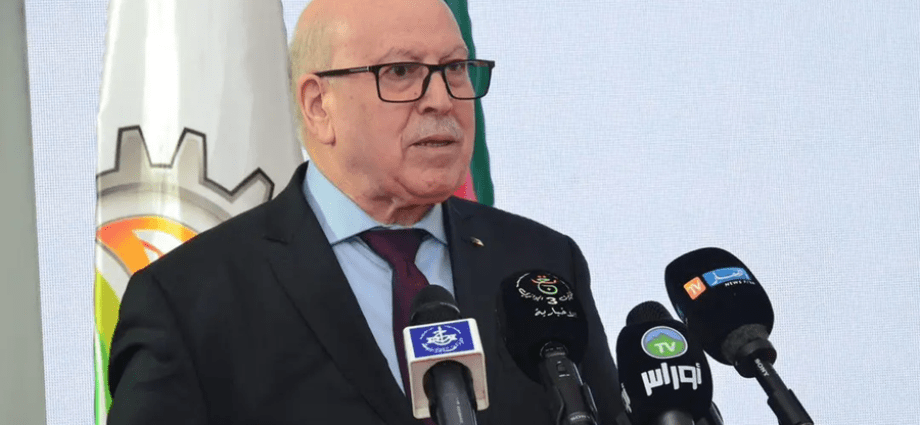
In a significant policy shift, Algeria is reframing its anti-corruption efforts not merely as a legal reckoning, but as the cornerstone of a new industrial strategy. During a recent inspection tour in Guelma, Minister of Industry Yahia Bachir articulated a vision that moves past simple asset seizure. He declared that reviving industrial units recovered from corruption cases “is not simply the revival of a halted activity, but a comprehensive economic project.” This statement signals a profound evolution: recovered assets are being treated as foundational capital for rebuilding a more resilient, transparent, and productive national economy.
Speaking at the premises of the subsidiary Cereals and Preserves of the East—once part of the Amor Benamor group and now under the public agro-industrial group AGRODIV—the minister emphasized the “strong will of the State to transform the recovered industrial assets into a genuine production lever based on good governance.” This transition from private, allegedly corrupt ownership to state-managed operation under a reputable public group is a critical test case. It aims to replace opaque management with structured corporate governance, transparent supply chains, and accountability to public oversight, thereby restoring both operational integrity and public trust.
The minister’s visit to six such units in Guelma underscores a “field approach” mandated by President Abdelmadjid Tebboune. This hands-on methodology is designed to ensure that the revival of national industry is built on “solid economic foundations,” with explicit goals of wealth and job creation, as well as achieving industrial and food security. The strategic assignment of the recovered agro-food units in Guelma to AGRODIV is a prime example. This move is not administrative reshuffling; it’s a calculated integration. AGRODIV’s role is to ensure a regular supply of raw materials, enforce stringent quality and food safety standards, and, crucially, guarantee the interconnection of these units with national distribution networks and markets. This systems-thinking approach prevents revived factories from becoming isolated “cathedrals in the desert” and embeds them into the broader economic ecosystem.
The scope of the initiative extends beyond food security. The minister highlighted the special attention given to strategic units like CYCMA, a public enterprise producing bicycles, motorcycles, and mobility tricycles. This focus reveals a dual objective: first, to develop a “competitive national mechanical industry” to reduce import dependence, and second, to foster inclusive growth by manufacturing products like tricycles for people with reduced mobility. The revival plan for such enterprises represents a model for value-added, socially responsive manufacturing.
Ultimately, Algeria’s strategy represents a holistic blueprint for post-corruption economic reconstruction. It connects legal recovery (fighting corruption) with operational revival (restarting production) and systemic integration (linking to supply chains and markets). The inspection tour—covering units in El Fedjoudj, Bouati-Mahmoud, Ain Ben Beida, the Guelma sugar refinery, and the local industrial zone—symbolizes this comprehensive linkage. The success of this project will be measured not by the number of assets seized, but by their contribution to sustainable employment, export potential, and a demonstrably cleaner, more competitive industrial sector for Algeria’s future.