

Kenya’s ambitious push toward electric mobility is facing a critical stress test, not from technology, but from trust. For months, a groundswell of frustration from electric motorcycle riders has erupted across social media, targeting Spiro Bikes. Their grievances reveal more than mere customer service failures; they expose fundamental questions about equity, transparency, and the ethical foundations of the green transport revolution in emerging markets. This growing chorus of complaints suggests a widening chasm between corporate strategy and the lived reality of the riders who form the backbone of this transition.
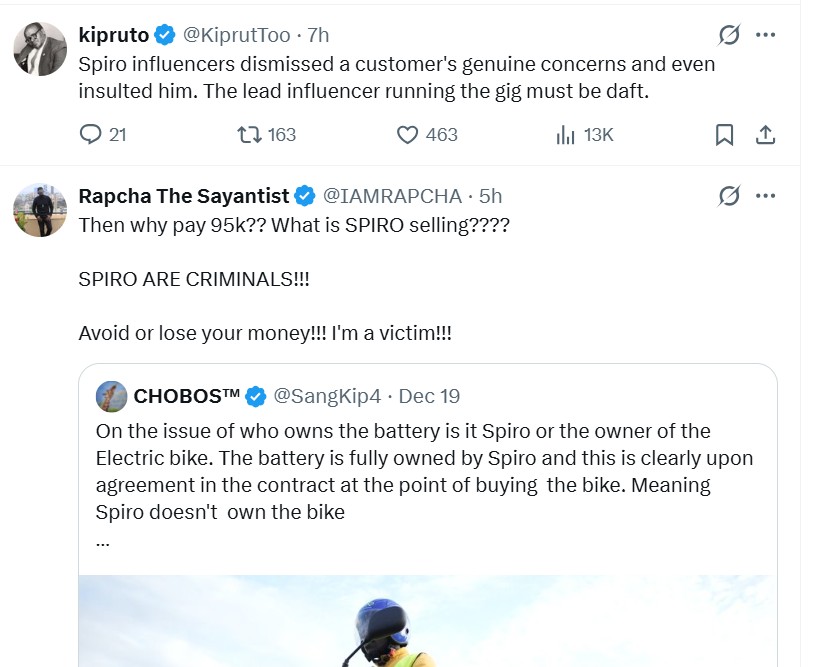
A systematic analysis of dozens of public testimonies from riders, mechanics, and industry observers on platforms like X reveals a disturbing pattern. The core contention is a restrictive financial model: Kenyan riders allege they are locked into perpetual lease or “rent-to-use” agreements for Spiro’s electric motorcycles. Crucially, they contrast this with what they understand to be the reality in other Spiro markets, such as Rwanda, where riders reportedly have access to clear rent-to-own schemes or outright purchase options. This perceived cross-border inequality has become a flashpoint, transforming individual complaints into a collective movement questioning the company’s fairness.
A Pattern of Complaints, Not Isolated Noise
The consistency of these reports, emerging independently from different regions over an extended period, points to systemic issues rather than isolated incidents. The litany of complaints is specific and severe:
- Opaque Ownership Terms: Contracts are criticized for being complex and failing to clearly state the ultimate path to ownership, leaving riders in the dark about their long-term financial commitment.
- The “Forever Lease” Trap: Many riders claim they only discovered after months or years of daily payments that the bike would never become their asset, despite covering maintenance and operational costs.
- Operational Hardships: Issues include sudden account deactivations that halt income, concerns over battery lifespan and swap reliability, and a near-total breakdown in official customer care channels.
- Defensive Posture: Perhaps most damaging are allegations of an aggressive communications strategy that allegedly involves mocking critics and deploying influencers to discredit riders online instead of addressing their concerns.

The rider’s predicament can be distilled into a stark equation: You bear all the risks of ownership (daily payments, maintenance, service, income dependency) without any of its ultimate security or equity. For a boda boda rider, this isn’t just a bad deal; it’s an existential threat. Ownership represents more than an asset—it is a safety net for illness, a college fund for children, and a pension plan. A perpetual lease model keeps riders in a state of financial precarity, undermining the very empowerment that green technology promises.
Ownership Disparity Between Countries
The question of “Why not here?” haunts Kenyan riders. If Spiro can offer ownership models in Rwanda, Benin, or Togo, what unique factor in Kenya—one of its largest and most mature markets—justifies a fundamentally different, less favorable arrangement? Riders speculate whether market size has made them a captive audience for a pure revenue-maximizing lease model, a perception that erodes trust at its core. This disparity strikes at the heart of Pan-African business ethics: should a company’s treatment of customers vary so dramatically based on geography?
Silence Where Answers Are Needed
The crisis has been exacerbated by a profound communication vacuum. Riders report that attempts to seek clarity via email, service centers, and helplines are met with silence or generic, non-answers. When public outcry on social media becomes the only viable channel, the reported response—allegedly coordinated attacks instead of constructive dialogue—has been catastrophic for the brand. This approach fails a basic tenet of crisis management: speculation and anger fill any space vacated by authoritative communication. The silence on the core issue of ownership disparity is particularly deafening.
Claims of Online Intimidation
The allegations of a hostile online response strategy have brought Spiro’s communications leadership under intense scrutiny. Critics directly name Flora Limukii, Head of Strategic Communications, framing the department’s role not as one of spin, but of stewardship. True strategic communication in a crisis involves listening, demonstrating accountability, and showing respect for the customer’s lived experience. The current strategy, as perceived by riders, appears to prioritize brand defense over stakeholder engagement, a short-term tactic that risks long-term reputational ruin.
Spotlight on the Communications Department
This controversy transcends Spiro. It serves as a critical case study for Kenya’s entire e-mobility ecosystem and for impact investors worldwide. It poses uncomfortable questions: Can a solution be “green” if it is perceived as unjust? Does the noble goal of sustainability excuse exploitative business practices? The transition to electric vehicles must be just and inclusive to be sustainable. If the pioneers of this transition—the riders—feel exploited, public and political support for the entire green transport agenda could collapse, setting back progress by years.
Why This Matters Beyond Spiro
The riders’ demands are remarkably straightforward and reasonable: transparent contracts, clear ownership pathways, equitable treatment across markets, respectful dialogue, and freedom from harassment. They are not seeking handouts; they are seeking clarity and a fair stake in the system they power daily.
What Kenyan Riders Are Asking For
At the heart of this story is a fundamental mismatch between a disruptive technology’s promise and its practical implementation. The electric motorcycle revolution offers cleaner air and lower operating costs, but its success hinges on a social license to operate. This license is granted not by governments, but by the trust of users. Spiro’s situation in Kenya demonstrates how quickly that trust can evaporate when financial models are opaque and communication fails.
A Defining Moment for Electric Mobility in Kenya
The consistent, passionate, and growing voices from Kenyan riders are more than complaints; they are a warning. They signal that the future of mobility in Africa will be built not just on batteries and charging stations, but on fairness, transparency, and respect. For Spiro and the industry at large, the path forward requires moving beyond technical innovation to embrace contractual and communicative innovation. The bikes may be electric, but the current powering this movement is decidedly human.