

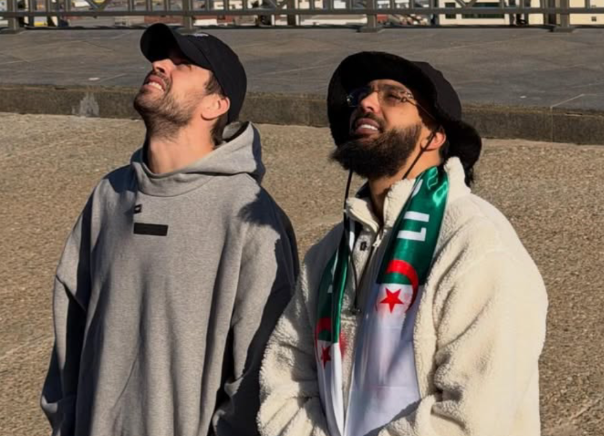
Former FC Barcelona and Spanish national team star Gerard Piqué’s recent visit to Algiers was more than a casual trip; it was a strategic mission marking a significant step in the globalization of his disruptive sports venture, the Kings League. Following the December announcement of Algeria’s inclusion in the league’s international framework, Piqué’s presence on the ground signals a deep commitment to building genuine connections in new markets.
His itinerary, captured in widely shared social media footage, was telling. After arriving at Algiers International Airport, Piqué made a pointed visit to the iconic Martyrs’ Memorial (Maqam Echahid). This 92-meter concrete monument, shaped like three standing palm leaves sheltering an “eternal flame,” is a profound symbol of Algeria’s struggle for independence. For a global sports figure to prioritize this site demonstrates a level of cultural awareness and respect that transcends typical business diplomacy. It’s a gesture that acknowledges the nation’s history and identity, not just its market potential.
It was in this context that Piqué drew his now-headline comparison, noting, “Algiers looks a lot like Barcelona.” On the surface, this might refer to the shared Mediterranean coastline, the vibrant urban energy, or the blend of historic and modern architecture. Both cities are bustling metropolises perched on the sea, with a deep-seated passion for football woven into their cultural fabric. However, the deeper, more strategic parallel lies in what Piqué is attempting to build. Just as Barcelona is a historic club with a globally recognized identity (the ‘Mes que un club’ ethos), Piqué’s Kings League aims to create new, community-anchored football identities in cities worldwide. He may see in Algiers the same potential for a passionate fanbase that can adopt and shape a team as its own.
This move is a masterclass in the modern playbook of sports league expansion. The Kings League, with its 7-a-side format, live-streamed draws, and icon-based “secret weapons,” revolutionized football consumption in Spain. Its expansion follows a franchise model akin to major American leagues or Formula 1, where identifying markets with untapped potential and a latent passion for the sport is key. Algeria, with a young, digitally-savvy population and a football-crazy culture, represents an ideal frontier. Piqué isn’t just selling a tournament; he’s offering a participatory spectacle. By personally planting the flag, he lends his considerable credibility and star power to the launch, ensuring local media buzz and fan engagement from day one.
Furthermore, this highlights a shift in how sports properties grow. Traditional European club tours or friendly matches are passive experiences for the host nation. In contrast, Piqué’s model invites active partnership—Algeria isn’t just a stop on a tour, but a founding member of a growing international circuit. The long-term vision likely involves regional qualifiers, intercontinental playoffs, and a true world cup-style finale for the Kings League, with Algeria positioned as a potential hub for North Africa.
In essence, Piqué’s walk through Algiers was a multifaceted statement. It was a sign of respect to Algerian heritage, a savvy business development move, and a live demonstration of his vision to connect global football cultures through a new, innovative format. The comment about Barcelona wasn’t merely a tourist’s observation; it was a founder seeing a familiar spark of potential in a new city, recognizing the ingredients needed to build another cornerstone for his ambitious global sports empire.