

The recent Presidential Media Dinner hosted by President Adama Barrow has ignited a fierce debate about the relationship between power and the press in The Gambia. While critics dismiss it as a superficial appeasement, this perspective fundamentally misreads the event’s profound symbolic weight and its place within The Gambia’s fragile democratic journey. The real issue is not the dinner itself, but our collective anxiety about what a healthy state-media relationship should look like after decades of brutal repression. The ultimate test of press freedom is not whether journalists refuse an invitation, but whether they can fearlessly question power the morning after.
To label Gambians—and specifically journalists—as “too easily appeased” by a shared meal is to engage in a profound historical amnesia. It conflates access with acquiescence. No serious journalist believes a plate of benachin or domoda is a substitute for institutional press freedom. What this dinner represented was a tangible, physical break from a recent past where the State House was not a venue for dialogue, but a fortress of fear. Under Yahya Jammeh’s 22-year rule, the debate was not about the optics of breaking bread with the president; it was about survival.
Independent media houses were firebombed. Editors like Chief Ebrima Manneh disappeared. Reporters like Deyda Hydara were assassinated. Others faced torture, exile, and arbitrary imprisonment. To reduce the simple act of journalists walking into the State House openly, speaking, and leaving unharmed to a trivial “dinner” is to ignore the painful, hard-won journey from a police state to a democratic space.
This engagement should be seen as a normalization of dialogue, not a betrayal of independence. Critics who dismiss it often ignore the global context. In mature democracies, structured interaction between the press and the executive is standard. The White House Correspondents’ Dinner in the United States is a century-old tradition blending satire and access. Downing Street and the Élysée Palace host regular media receptions. Across Africa—in Ghana, Kenya, Senegal, and South Africa—similar engagements occur without controversy. These events do not weaken the press; they institutionalize its role as the Fourth Estate within the machinery of state. A confident democracy does not fear conversation; it structures it.

The argument that journalists are “appeased” by food is not only condescending but insults their professionalism. It reduces constitutional actors to children incapable of discernment. A journalist’s integrity is not determined by the menu but by the courage of their questions. A principled reporter does not lose independence by entering the State House; a compromised one was compromised long before the invitation arrived. The true measure will be the rigor of their reporting in the days and weeks that follow.
Furthermore, the critique often overlooks the concrete, institutional reforms undertaken under President Barrow—reforms unprecedented in Gambian history. These are not mere gestures but foundational shifts: the allocation of land for a permanent Gambia Press Union headquarters, the signing of the landmark Freedom of Information Act (2019), the reopening of shuttered media outlets, and the cessation of state-sponsored violence against journalists.

These actions build the infrastructure of a free press. The dinner exists within this continuum of progress, not apart from it.
However, a crucial dimension is missing from both the event and much of the criticism: protocol and proactive pressure. In functioning democracies, access is a two-way street. While the presidency should proactively hold regular press conferences, the media corps and its unions also have a responsibility to formally demand engagement. Requests for presidential interviews or press briefings are typically submitted through official channels—the Minister of Information, the Director of Press at State House, or the President’s communications office. This is standard procedure in Washington, London, Pretoria, and Accra. Therefore, a critical question arises: Have Gambian media houses and the GPU collectively and formally requested a full presidential press conference through the proper channels?

A press conference is not arranged by presidential whim alone; it is coordinated by handlers and diaries. If the structured demand is not made, the process often does not begin.
Ultimately, the Barrow Media Dinner is not the destination; it is a symbolic bridge. It is a step away from a culture of fear and toward a culture of openness. The critic is right to demand more—more regular press conferences, broader access for all media, and tougher accountability. But they are wrong to dismiss a democratic opening because it doesn’t solve every problem at once. Post-transition societies must learn to walk and demand to run simultaneously. Engagement is not appeasement; dialogue is not surrender.
The dinner should be seen for what it is: a testament that The Gambia is no longer a country where journalists must whisper. The hard work of fortifying press freedom—through legal protection, economic sustainability for media houses, and relentless investigative journalism—continues unabated. But that work begins with access, not avoidance. It begins with the confidence to sit at the table, and the greater courage to hold power to account once you leave it.
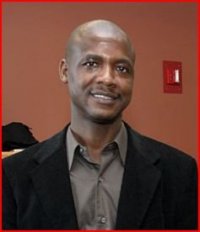
Analysis by Alagi Yorro Jallow