
Mali’s Entry Suspension for U.S. Nationals: A Deep Dive into the Policy, Its Context, and Practical Implications

Mali has enacted a full suspension of entry for U.S. citizens, implementing a reciprocal foreign policy measure. The ban includes critical exceptions for permanent residents, current visa holders, and select groups like diplomats and athletes deemed to serve Malian interests. This targeted action underscores a strategic shift towards asserting national sovereignty and recalibrating international relations. The policy remains subject to ongoing evaluation, signaling it is a calculated diplomatic tool rather than a permanent closure.Continue Reading

Decoding the New U.S. Travel Restrictions: A Comprehensive Guide to Affected Countries, Policy Context, and Practical Implications

The U.S. has enacted new travel restrictions, imposing a full entry ban on nationals from Syria, South Sudan, Mali, Niger, Burkina Faso, and holders of Palestinian Authority passports, while adding targeted limits for Sierra Leone and Laos. This policy extends existing bans on several other nations, continuing a security-focused immigration framework from the previous administration. Critics condemn the measures as discriminatory and a barrier to legal immigration and refugee protection, while U.S. authorities defend them as essential for national security. The full impactContinue Reading

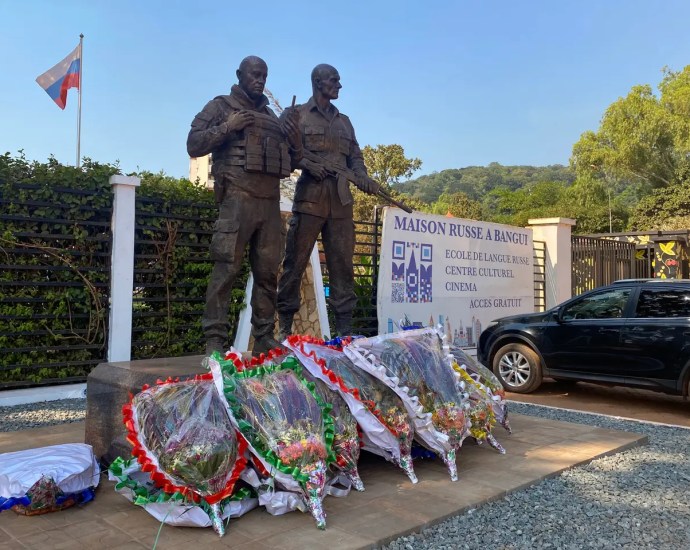
The Wagner Paradox: Why the Central African Republic Remains Russia’s Last African Fortress

Russia is consolidating its influence in the Central African Republic through overt and symbolic acts, including a new mural depicting the nations’ leaders and a statue honoring the deceased founders of the Wagner Group. These public monuments, shrouded in mystery regarding their creators, serve as permanent propaganda, normalizing the presence of Russian mercenaries and solidifying a strategic partnership. The veneration of figures like Prigozhin and Utkin, despite their rebellion and deaths, signals that Wagner’s legacy and Moscow’s indirectContinue Reading

Bulgaria Joins the Eurozone: A Historic Shift from the Lev to the Euro in 2026

Bulgaria has officially adopted the euro as its national currency in 2026, becoming the 21st member of the Eurozone. This marks a pivotal economic and political integration step nearly two decades after joining the EU, replacing its historic currency, the Lev, in use since the 19th century. The move solidifies the euro’s expansion and demonstrates the enduring appeal of the monetary union for smaller EU economies. It represents a significant milestone in Bulgaria’s post-communist economic alignment with coreContinue Reading

From Pragmatic Power to Regional Pariah: The UAE’s Diplomatic Drift and Its Consequences for Arab Unity

The United Arab Emirates’ aggressive foreign policy, marked by regional interference and a strategic alignment with Israel, is eroding its longstanding reputation for pragmatic stability. This shift has provoked direct warnings from Algeria and, critically, a recent convergence with Saudi Arabia, signaling a profound diplomatic isolation for Abu Dhabi. The core risk is the UAE’s transformation into a political subcontractor, undermining Arab solidarity and serving external agendas at the expense of its own regional credibility and legitimacy.Continue Reading

France-Algeria 2025: Anatomy of a Diplomatic Rupture and the Fraught Path to Reconciliation

The 2025 diplomatic crisis between France and Algeria reached a historic peak, driven by judicial disputes and migration conflicts, resulting in mutual expulsions of diplomats. The November release of writer Boualem Sansal, a key French demand, presents a potential but fragile opening for reconciliation. While this gesture may initiate a thaw, the underlying structural tensions—particularly regarding the Western Sahara and migration policies—remain significant obstacles to a full normalization of relations. The path forward hinges on whether both nations can leverage this symbolic actContinue Reading

Niger and Türkiye Strengthen Strategic Ties: A Deep Dive into the Tiani-Erdogan Call and Its Regional Implications

Niger’s President Abdourahamane Tiani and Türkiye’s President Recep Tayyip Erdoğan held a strategic call, reinforcing a strong bilateral partnership. A key outcome was Türkiye’s explicit and firm support for Niger’s territorial integrity and sovereignty, signaling a significant geopolitical alignment. The leaders celebrated converging viewpoints and committed to advancing mutual projects, indicating a deepening, action-oriented cooperation beyond diplomatic formalities. This exchange underscores Türkiye’s expanding influence in the Sahel throughContinue Reading

Strategic Realignment: How Saudi Arabia’s Warning to the UAE Validates Algeria’s Longstanding Regional Doctrine

A rare public rebuke from Saudi Arabia exposes deep fractures within the Arab camp, directly challenging the UAE’s aggressive regional policy of military intervention and proxy warfare. The analysis positions Algeria as a consistent and prescient critic of this strategy, having long identified the destabilizing effects of Emirati actions in Libya and Sudan, which sabotage political solutions and export insecurity. Most critically, the UAE is accused of leveraging its alliance with Morocco to facilitate Israeli strategic infiltration into the Maghreb, a move Algeria views asContinue Reading

A Duty Fulfilled: Analyzing Algeria’s Tenure on the UN Security Council and Its Stance on African Sovereignty

Algeria’s UN representative, Amar Benjamaa, asserted the nation’s principled stance in the Security Council, emphasizing its commitment to African solidarity and specific territorial integrity issues. He highlighted Algeria’s alignment with the A3+ group and praised non-African members, like Guyana, for championing African causes. The ambassador concluded that Algeria departs the Council confident it has fulfilled its duty, framing its tenure as one of active advocacy for its core diplomatic priorities.Continue Reading

Beyond the Headline: Decoding China’s Sanctions on U.S. Defense Firms and the High-Stakes Calculus Over Taiwan

China has imposed sanctions on 20 U.S. defense firms and 10 executives for arms sales to Taiwan, declaring the Taiwan issue an inviolable “red line” in Sino-U.S. relations. It warns that any entity involved will “pay the price,” asserting its unwavering resolve to protect national sovereignty. The action demands the U.S. adhere to the “One China” principle, cease arming Taiwan, and refrain from sending false signals to separatist forces. This represents a significant escalation inContinue Reading