Beyond the Headlines: The Deadly Unrest in Kolwezi and the Systemic Crisis in Congo’s Artisanal Mining Sector

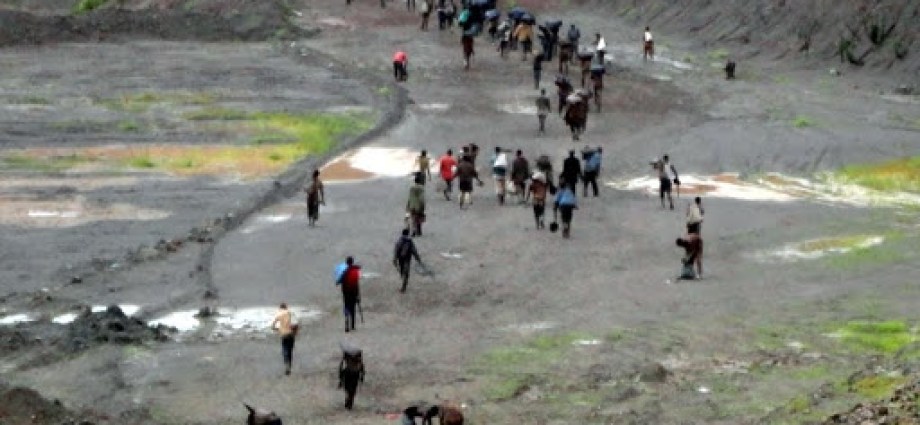
A government suspension of artisanal mining and mineral processing in the DRC’s Lualaba province has triggered fatal protests, revealing the severe economic and social instability caused by top-down policy changes in the sector. The violent clashes, which included road blockades, property damage, and the deadly beating of a mining company employee, underscore the immediate human cost and security risks when the livelihoods of countless artisanal miners are abruptly cut off. In response, provincial authorities are attempting a precarious balance, urging complianceContinue Reading


Analyse : Le vote de Mamadi Doumbouya, un acte symbolique fort dans le contexte politique guinéen

Guinean presidential candidate Mamadi Doumbouya cast his vote in Conakry, accompanied by his family and met with significant public support from gathered crowds. This event highlights his prominent status as a key challenger in the election and serves as a real-time indicator of his popular appeal. The enthusiastic reception suggests a strong grassroots mobilization that could be a decisive factor in the electoral outcome. For stakeholders, this public demonstration of support is a critical data point for assessing the political landscape and potential shifts inContinue Reading

Wike’s Political Calculus: Loyalty, Timing, and the Battle for Rivers State Beyond 2026

Nigerian political heavyweight Nyesom Wike has positioned himself as a central, albeit controversial, kingmaker, declaring the official start of Rivers State’s 2027 political cycle for January 2026. He frames his frequent criticism as a consequence of demanding accountability and honoring political agreements, notably his steadfast alliance with President Tinubu, which he contrasts with late-comer supporters. A key takeaway is Wike’s explicit warning that his faction expects to be respected and not taken for granted in upcomingContinue Reading

Strategic Review and Roadmap: Analyzing the PFDJ Central Region’s 2025 Assessment and 2026 Agenda

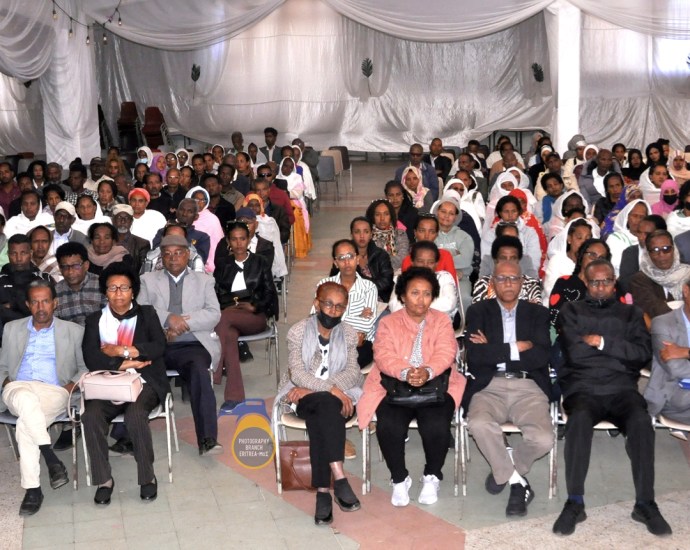
The PFDJ’s Central Region office concluded its 2025 activities, highlighting organizational strengthening and public mobilization for the Martyrs Trust Fund as key successes. Its 2026 strategy will prioritize cadre training and leveraging past program momentum to enhance national contributions. Critical adopted recommendations focus on empowering women’s organizations, expanding community-based campaigns, and promoting voluntary blood donation. This meeting underscores the party’s integrated approach to governance, linking organizational capacity with direct public engagement in social and patriotic initiatives.Continue Reading

The Airport as a Microcosm: How Systemic Corruption at Cameroon’s Borders Fuels a National Exodus

The article reveals Cameroon’s airports as a microcosm of a profound national crisis, where a massive brain drain is being actively facilitated by institutionalized corruption. This systemic extortion, from customs to health checks, has transformed state bureaucracy into a predatory machine that accelerates the exodus of the nation’s brightest talents and affluent families. The situation highlights a catastrophic failure of governance, where anti-corruption bodies are powerless and the state effectively profits from its own citizens’ desperation to leave. Ultimately, the crisis demandsContinue Reading

The Uncrossable Line: Why Revoking Inherent Nationality Undermines Democracy and the Rule of Law

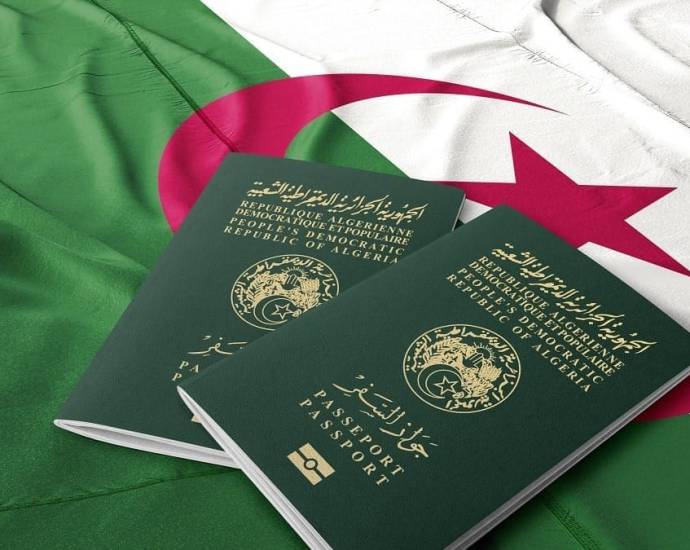
Algeria’s National People’s Assembly has passed a significant amendment to its nationality code, introducing a provision for the revocation of Algerian nationality from citizens who commit acts “seriously harming the state’s interests” while abroad. This move, which resurrects a previously stalled 2021 proposal, raises profound ethical, moral, and legal concerns by potentially rendering individuals stateless for actions taken outside the country. The core controversy lies in the state’s assertion of power to strip citizenship of origin—a fundamental,Continue Reading

Decoding the Geopolitical Strategy: How Sudan’s Finance Minister is Leveraging UN Agreements and Regional Alliances to Consolidate Power

The UN’s 2025 Interim Cooperation Framework with Sudan’s de facto authority marks a critical shift from principled engagement to silent recognition of the post-coup military regime, strategically empowering Finance Minister Gibril Ibrahim. This move, coupled with a separate port agreement favoring Turkey, effectively abandons the integrated Humanitarian-Development-Peace approach, risking Sudan’s fragmentation and legitimizing militia control. The underlying agenda views Sudan through a colonial lens as “Terra Nullius,” promoting a governance model whereContinue Reading

Beyond the PDP’s Decline: Hakeem Baba-Ahmed on the Imperative for a New, Ideas-Driven Opposition in Nigeria

A prominent political analyst declares Nigeria’s main opposition party, the PDP, irreparably broken, signaling a critical inflection point for the country’s democracy. The resulting power vacuum creates a rare opportunity for emerging parties like the ADC to establish a credible alternative to the ruling APC. However, success is contingent on moving beyond mere anti-establishment rhetoric; Nigerians now demand substantive policy platforms and clear governance plans over partisan slogans. This shift underscores a new political reality where viability is determined by ideological clarity and practical solutionsContinue Reading

Eskom’s Revised Unbundling: A Critical Analysis of the Holding Company Model and Its Risks to South Africa’s Energy Future

South Africa’s revised plan to restructure its state-owned power utility, Eskom, into subsidiaries under a single holding company—rather than creating fully independent entities—is facing significant opposition from creditors and international funders. This departure from the original, internationally-backed model threatens critical financing for a massive transmission grid expansion and the $8.3 billion Just Transition Partnership, which aims to shift the country away from coal. Analysts warn the new structure creates governance conflicts and fails to establish the transparent, competitive electricityContinue Reading

Beyond the Cranes: How 2025’s Landmark Projects and Policy Shifts Are Reshaping Rwanda’s Urban Future

Rwanda’s real estate sector in 2025 is defined by transformative momentum, driven by a strategic public-private partnership model that addresses the full housing spectrum. Key developments include the innovative Nyabisindu rehousing project, which leverages resident land contributions for equitable urban renewal, and high-value investments like the $80 million Ramba Hills mixed-use complex and a $25 million eco-housing estate. This dual-track approach—combining inclusive, government-led affordable housing with premium private developments—demonstratesContinue Reading