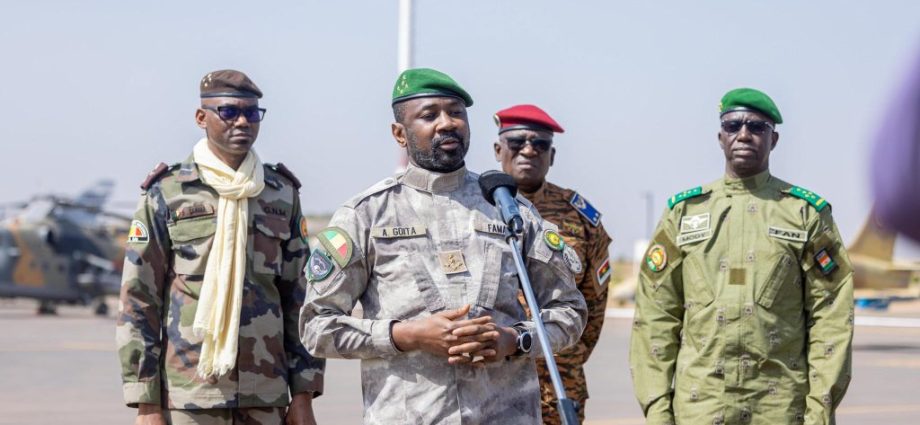
A New Chapter in Sahelian Sovereignty: The Strategic Activation of the AES Unified Force

The Sahel States Alliance (AES) has officially launched its multinational Unified Force, a strategic military initiative marking a decisive shift towards regional self-reliance in security. This move consolidates a new, independent security architecture for the Sahel, directly challenging traditional international partnerships and frameworks. The high-level ceremony underscores the political will of the member states’ military-led governments to pursue integrated, collective defense against shared threats. This operationalization represents a critical step in the AES’s evolution from a political pact into aContinue Reading
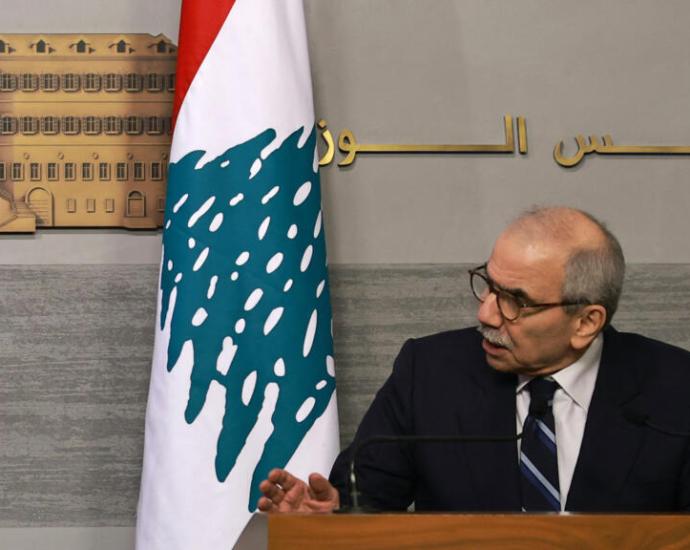
Lebanon’s Critical Crossroads: Deciphering the First Phase of the Hezbollah Disarmament Plan

Lebanon’s government has announced the imminent completion of the first phase of a plan to disarm Hezbollah, framing it as a critical step toward re-establishing the state’s monopoly on weapons. This development follows high-level talks with international ceasefire monitors, signaling a coordinated effort to implement a lasting truce with Israel. The accelerated timeline, targeting completion within days, suggests significant political momentum and potential external pressure to demilitarize the powerful faction. This move represents a pivotal, if initial, test ofContinue Reading

Beyond the Rally: A Strategic Analysis of Ouattara Dramane’s 2025 Campaign in Plateau and Its Implications for Ivorian Politics

Ouattara Dramane (OD) of the RHDP has launched his legislative campaign in Plateau, Côte d’Ivoire, with a disciplined strategy focused on a peaceful, rules-based campaign aimed at securing a decisive victory. His core value proposition is to provide the constituency with a fully dedicated representative, shifting from political rhetoric to a future-oriented commitment of tangible service. The campaign’s unique insight is that electoral success is best achieved not through division, but by uniting the electorate around a promise ofContinue Reading

South Africa 2025: A Nation at the Crossroads – From Diplomatic Triumph to Domestic Paralysis

South Africa enters 2026 in a state of unresolved crisis, with its political order fragmenting as the ANC’s historic alliance collapses and public patience for ideological symbolism wears thin. The core reality is a profound disconnect: a political elite focused on internal survival and ritual, while a population of 64 million demands tangible delivery on jobs, services, and basic infrastructure. This has created a nation where political loyalty is now earned solely through performance and governance, not liberation struggle pedigree. The country’s path forward hingesContinue Reading

Mayor’s Dismissal in Limpopo: A Case Study in Procedural Flaws, Factional Politics, and Municipal Dysfunction

The dismissal of Modimolle-Mookgophong Mayor Sechele Aaron Sebolai, while officially for misconduct, appears deeply entangled in ANC factional battles, suggesting governance is being weaponized for political purges. This political infighting is triggering a wider administrative collapse, with the municipal manager facing suspension over a R25 million loan and millions more allegedly vanishing through dubious payments. The DA contends the dismissal process itself was flawed, as the ethics committee’s recommended sanctions were overridden for immediate removalContinue Reading

Mali’s Transitional Government Unveils Major Security Reforms and Strategic Initiatives: A Deep Dive into the December 2025 Council of Ministers

The Malian transitional government has enacted a significant reform by adopting a new ordinance to restructure the National Police Directorate. This reorganization directly addresses critical deficiencies exposed by the force’s militarization in 2022 and its current inadequacy against evolving threats like terrorism and cybercrime. The core strategic shift moves the police from a purely public order role to a modern, intelligence-driven institution capable of executing national security policy. This reform represents a pivotal attempt to recalibrate state security architecture to meet contemporary challenges.Continue Reading

Staten Island’s Secession Threat: A Deep Dive into the Political, Economic, and Historical Forces Behind the Latest Breakaway Movement

The election of Democratic Socialist Zohran Mamdani as New York City’s mayor has catalyzed a renewed and serious secession movement in Staten Island, driven by deep-seated political and cultural alienation from the city’s core. This push leverages a long history of perceived neglect and a stark ideological divide, most recently evidenced by the borough’s overwhelming vote against Mamdani. While secession sentiment has strong historical precedent, most notably a 1993 referendum, its viability is critically undermined by StatContinue Reading

Beyond the Call: Upper Nile’s Deputy Governor Charts a Path from Fracture to Unity Ahead of Pivotal Peace Conference

Deputy Governor Deng Joh Angok calls for a unified commitment to forgiveness and peaceful coexistence as the essential foundation for rebuilding Upper Nile State. He announces a major state-sponsored reconciliation conference, aiming to unite all community stakeholders in honest dialogue to move beyond past grievances. The core argument is that only through this collective reconciliation can the state shift from conflict to sustainably developing its resources for the benefit of all citizens. This initiative represents a critical, government-led effort to mend the social fabric and restore stability.Continue Reading

Nation on Edge: Police Deploy Special Forces as Labour’s ‘Day of Mourning’ Protest Confronts Insecurity and Economic Crisis

The Nigeria Labour Congress (NLC) is proceeding with a high-stakes nationwide protest over severe insecurity and economic hardship, framing it as a critical “democratic demand for the fundamental right to life.” Security forces have deployed tactical units to maintain order, warning against violence or hijacking by political elements. The NLC has issued a stark ultimatum, stating that any disruption or harm to protesters will trigger an immediate and indefinite nationwide strike, risking a total economic shutdown. This positions the protest as aContinue Reading

Beyond Endorsements: Analyzing the Political Significance of FCT Traditional Rulers’ Support for Tinubu and Wike

President Tinubu’s appointment of an FCT indigene as minister has galvanized local leaders’ support by fostering a powerful sense of inclusion and national belonging. Traditional rulers across key FCT communities are now explicitly linking this political representation to tangible infrastructure gains and pledging electoral loyalty for the 2027 election. This creates a reciprocal political compact: development for support. The administration has thus strategically converted a symbolic appointment into a concrete foundation for sustained political capital in the territory.Continue Reading