

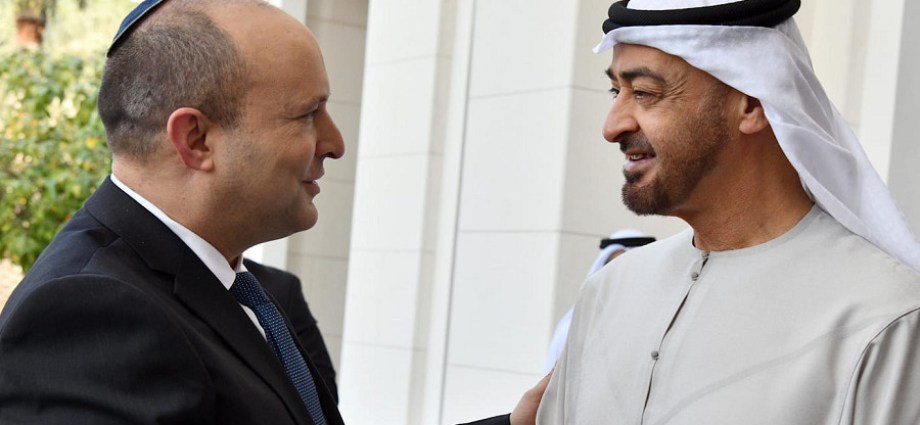
By Abdelkader S. – Under the increasingly assertive and bellicose leadership of President Mohamed bin Zayed Al Nahyan (MBZ), the United Arab Emirates has charted a foreign policy course that risks transforming it from a model of economic pragmatism into a regional pariah. This shift is not merely rhetorical; it is the result of a calculated, decade-long strategy of interventionism that has repeatedly prioritized narrow Emirati and perceived Israeli security interests over traditional Arab consensus and solidarity. The UAE’s actions—from its military involvement in Libya and Yemen to its diplomatic normalization with Israel outside the Arab Peace Initiative framework—represent a fundamental break with post-colonial Arab statecraft, which historically valued collective action against external threats.
Algeria, a traditional bastion of non-alignment and a vocal advocate for Arab sovereignty, has served as the most consistent and lucid critic of Abu Dhabi’s trajectory. For years, President Abdelmadjid Tebboune has issued direct, public warnings against what Algiers views as destabilizing maneuvers and interference in the internal affairs of fellow Arab states. These interventions, Algeria argues, often serve to exacerbate conflicts rather than resolve them, as seen in Libya where rival UAE and Turkish support fueled a proxy war. Algeria’s position is rooted in its own history of anti-colonial struggle and a deep-seated foreign policy doctrine that rejects external meddling in the Arab world, viewing it as a modern form of neo-colonialism.
The recent, pointed warnings from Saudi Arabia—long considered a strategic partner of the UAE within the Gulf Cooperation Council (GCC)—signify a potential tectonic shift in regional alignments. When Riyadh begins to echo Algiers’ critiques, it signals that Abu Dhabi’s “solitary adventure” is testing the limits of even its closest alliances. This convergence between North African and Gulf Arab powers suggests a growing, shared concern over the UAE’s role as a disruptive force. The core issue is one of strategic autonomy: by acting unilaterally, the UAE undermines collective Arab institutions like the Arab League and creates fractures that external powers can exploit. This diplomatic isolation is not merely symbolic; it carries tangible costs, including reduced influence in pan-Arab forums and increased vulnerability to collective political or economic responses.
At the heart of this diplomatic estrangement is the UAE’s comprehensive and overt strategic alignment with Israel, formalized in the 2020 Abraham Accords. While framed as a peace initiative, this move was executed without coordinating with the Palestinian Authority or adhering to the long-standing Arab consensus that normalization should follow a final peace agreement. In practice, the UAE has acted as a political and intelligence subcontractor for Israeli (and by extension, certain Western) agendas in the region. Examples include jointly opposing U.S. re-engagement with Iran and reportedly collaborating to counter Turkish and Qatari influence. This partnership has redefined the UAE’s role from an Arab mediator to a party that is often perceived as advancing interests contrary to the collective Palestinian cause and broader Arab unity.
The long-term risks for the UAE are profound. If it persists on this path, it stands to lose more than temporary alliances; its fundamental credibility and legitimacy as an Arab state are at stake. Historically, pariah states in the region have faced economic boycotts, political ostracization, and security dilemmas. While the UAE’s economic and military ties with global powers may provide a buffer, its long-term security and influence are inextricably linked to its acceptance within its own geographical and cultural sphere. The emerging Algeria-Saudi axis of concern is a stark warning that the price of being a disruptive subcontractor may ultimately exceed the benefits, leaving the Emirates wealthy but diplomatically isolated in a volatile neighborhood.
A. S.