

Mali’s Health Agency Charts Ambitious 2026 Course, Expands Coverage to Injured Drivers
BAMAKO – The National Agency for Medical Assistance (ANAM) has outlined a significant expansion of its 2026 work plan, targeting enhanced healthcare access and solidifying a new social pact that now formally includes drivers injured in the line of duty.
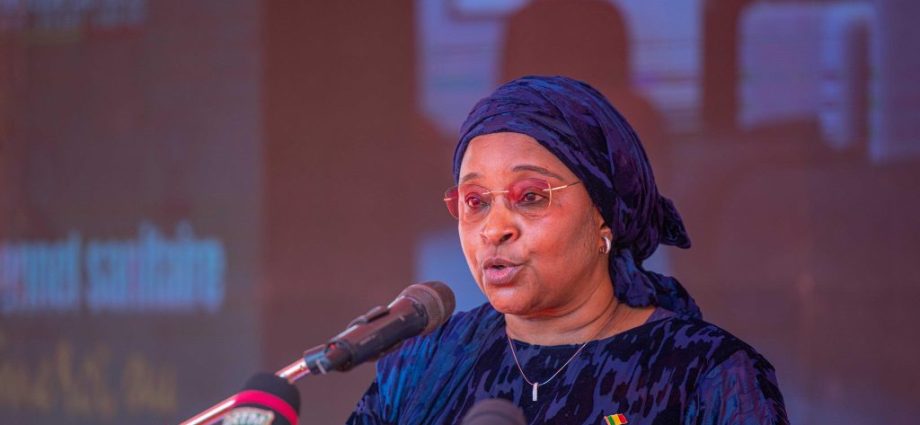
The strategy was unveiled by Colonel-Major Doctor Assa Badiallo Touré, Minister of Health and Social Development, during the 24th regular session of the ANAM Board of Directors in Bamako.
Beyond Administration: Framing Healthcare as a Republican Pact
In a speech that framed medical assistance as a core tenet of national solidarity, Minister Badiallo moved beyond technicalities to emphasize its role in upholding fundamental rights.
“Medical assistance cannot be reduced to a mere technical or administrative mechanism,” she stated. “Instead, it must embody our republican pact, founded on solidarity, equity, and respect for fundamental rights.”
This philosophical grounding sets the stage for a “new phase” for the agency, one focused on more inclusive governance, transparent management, and strengthened synergies with local authorities and development partners.
Symbolic Gesture, Substantive Policy: RAMED Coverage for Drivers
A poignant moment of the session was the symbolic presentation of RAMED (Medical Assistance Scheme) cards to six drivers injured while escorting petroleum product convoys. This act formalizes a government protocol extending the state’s healthcare safety net to this vulnerable group.
Analysts see this as a strategic move acknowledging the risks faced by essential workers in a nation grappling with logistical and security challenges. The Secretary General of the National Union of Drivers, Moussa Bakayoko, leveraged the moment to propose that November 20 be dedicated annually to the nation’s drivers.
2025 in Review: A Year of Measured Progress and Financial Hurdles
The session also served to review the agency’s performance in 2025. While a budget of over 3.1 billion CFA francs enabled the completion of 54% of planned activities, the Minister highlighted critical financial bottlenecks.
Despite a 74% overall budget mobilization rate, funding was heavily reliant on the state, which contributed 99.5% of received funds. Contributions from local authorities (37.7%) and technical and financial partners (23.7%) fell significantly short of expectations, revealing a dependency that could impact long-term sustainability.
Notable achievements amidst these constraints included registering over 99,000 new RAMED beneficiaries and providing medical coverage for more than 27,000 individuals.
The 2026 Blueprint: A 11% Budget Increase to Tackle Systemic Challenges
To address persistent challenges—including delayed state funding, low local contributions, and the high cost of treating conflict-related injuries—ANAM’s 2026 plan is both more ambitious and more structured.
The new work plan is built around 65 activities distributed across seven strategic axes, from institutional commitments and registration to governance and communication.
This operational framework will be backed by a forecast budget of 3.52 billion CFA francs, an 11% increase from 2025. The funding mix is also set for a rebalancing, with projections of 53% from the state, 23% from local authorities, and 24% from partners.
This planned diversification suggests a strategic push to make the agency’s financial base more resilient and less susceptible to single-source delays.
Analysis: ANAM at a Crossroads of Policy and Practicality
The developments at ANAM’s board session reflect a broader narrative in Mali’s public health sector. The agency is being positioned not just as a healthcare provider but as a key instrument of social cohesion.
The inclusion of injured drivers under RAMED is a clear signal of the government’s intent to use health policy as a tool for national recognition and solidarity. However, the ambition is tempered by the hard realities of budget execution and mobilization.
The success of the 2026 plan will hinge on converting the proposed, more balanced funding model into tangible financial commitments. Closing the gap between projected and actual contributions from local authorities and partners will be the critical test for achieving the plan’s 65 activities and ensuring that the “republican pact” of healthcare becomes a universal reality for Malian citizens.
This report is based on information originally published by Le PAYS via Bamada.net.