

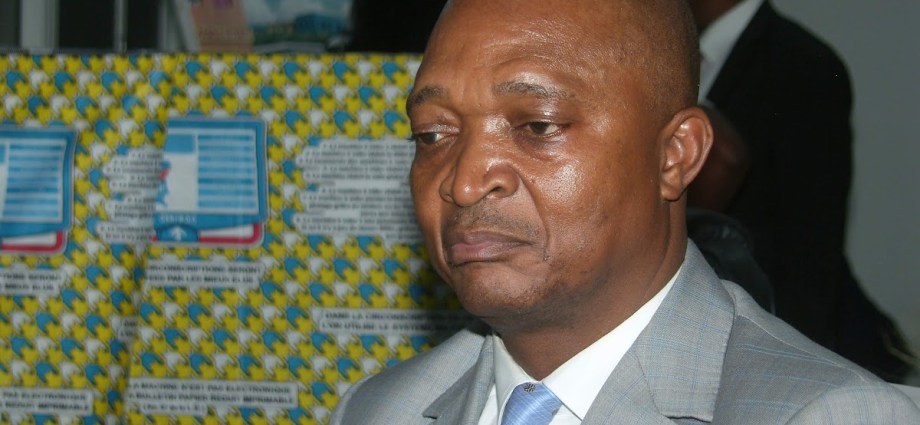
The political climate in the Democratic Republic of Congo (DRC) has escalated dramatically with the reported detention of a key opposition figure. The People’s Party for Reconstruction and Democracy (PPRD), the party of former President Joseph Kabila, has publicly denounced what it calls the “abduction” of its Permanent Secretary, Emmanuel Ramazani Shadary. According to party officials, uniformed men forcibly removed Shadary, the party’s chief executive and its 2018 presidential candidate, from his Kinshasa home in the early hours of Tuesday, December 16. His current whereabouts remain unknown, raising serious concerns from human rights observers.
Ferdinand Kambere, the PPRD’s Deputy Permanent Secretary, provided a chilling timeline, stating the operation began at 4 a.m. This event, he claims, is not isolated but part of a broader pattern of intimidation. Kambere revealed that Shadary’s close collaborator, identified as Mwarabu, was taken two hours earlier at 2 a.m., and referenced the prior unresolved case of another party member, Parole Kamizelo. “What is the point of targeting the permanent secretary, who is the very head of the party’s executive?” Kambere lamented, framing the actions as a direct attack on the party’s operational leadership.
The PPRD’s statement explicitly links Shadary’s detention to a recent, high-profile incident at the residence of former President Joseph Kabila, the party’s national president. By connecting these events, the party is constructing a narrative of systematic “acts of terror” and political persecution orchestrated by the administration of President Félix Tshisekedi. This accusation strikes at the heart of democratic norms and highlights the fragile state of political coexistence in the DRC, where tensions between the “Sacred Union” ruling coalition and the Kabila-aligned opposition have been a defining feature of the current political era.
A Party Under Legal and Extralegal Pressure
This alleged abduction occurs within a critical legal context. The PPRD’s official activities are currently suspended across the DRC. This suspension stems from an October 18 order by the Vice Prime Minister and Minister of the Interior, which was subsequently formalized by a notification from the Kinshasa-Gombe High Court on October 27. The government has typically justified such suspensions by citing national security or public order concerns, but opposition groups consistently label them as politically motivated tools of suppression.
Kambere’s condemnation underscores this tension, arguing that the state should be fostering “a climate of appeasement and serenity” to address the nation’s crises, not engaging in what he describes as nocturnal arrests. The lack of immediate official comment from judicial or security services, as noted in the report, often fuels speculation and deepens distrust. This information vacuum leaves the public reliant on partisan accounts and can exacerbate political polarization.
Broader Implications for Congolese Democracy
The reported treatment of Ramazani Shadary is more than a partisan incident; it is a bellwether for the state of civil liberties and political competition in the DRC. The use of uniformed personnel for pre-dawn detentions without immediate public judicial oversight mirrors tactics criticized by international human rights organizations in other authoritarian contexts. It raises urgent questions about due process, the right to a fair trial, and freedom from arbitrary detention.
For the PPRD, these events represent an existential challenge, combining legal suspension with the physical targeting of its leadership. For the DRC, it represents a test of its democratic institutions. Can the government reconcile its security mandates with its obligations to uphold political rights and transparent judicial processes? The international community, including regional bodies like the African Union and SADC, often monitors such developments closely, as they are seen as indicators of stability ahead of future electoral cycles. The resolution—or escalation—of this case will provide significant insight into the direction of Congolese governance.