

Sahrawi Minister Condemns Colonialism’s ‘Unchanging Core’ at Algiers Conference
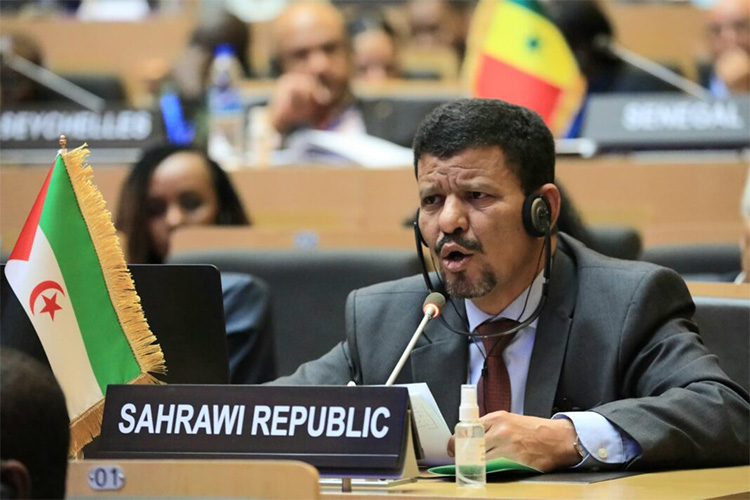
In a powerful address to international delegates, Sahrawi Foreign Minister Mohamed Salem Ould Salek has declared that the fundamental nature of colonialism remains constant, regardless of the justifications used to mask it. Speaking at a high-level ministerial session of the International Conference on Colonial Crimes in Africa, the minister asserted that the practice’s essence is the denial of a people’s right to self-determination.
The Unmasking of Colonial Justifications
Minister Ould Salek systematically deconstructed the historical narratives used to legitimize colonial projects. He pointed out that colonial powers have consistently cloaked their actions in evolving slogans, from a supposed “civilizing mission” to modern pretexts of “national security.”
“The true motive of colonialism, whether it comes from Europe, Africa, or any other continent, is greed for natural resources and the exploitation of peoples and their capabilities,” he stated, emphasizing that the underlying driver is universal.
A Unified Ideological Framework
The minister’s analysis presented colonialism not as a series of disconnected historical events, but as a persistent ideological framework. He defined this framework as being rooted in three core principles: the denial of others’ existence, the disregard for international law, and inherent greed.
This perspective reframes the discussion from individual conflicts to a systemic critique of power dynamics, suggesting that the form of colonial occupation may change, but its foundational logic remains intact.
Contextualizing the Western Sahara Conflict
While the minister’s comments were delivered in a global context, they carry profound implications for the long-standing dispute over Western Sahara. The territory, considered Africa’s last colony, has been partially occupied by Morocco since 1975, despite a 1991 ceasefire agreement that promised a referendum on self-determination.
The Polisario Front, which Ould Salek represents, governs the Sahrawi Arab Democratic Republic (SADR) and has long sought the fulfillment of that UN-backed promise. His speech can be seen as an effort to place the Sahrawi struggle within the broader, enduring pattern of colonial denial he described.
International Law and the Path Forward
By anchoring his argument in the violation of international law and the universal right to self-determination, the minister appealed to a legal and ethical consensus. This framing challenges the international community to apply consistent principles across all cases of territorial dispute and occupation.
The conference itself, focusing on colonial crimes in Africa, provided a significant platform for this message, connecting the Sahrawi cause to continental historical experiences with colonialism and the ongoing quest for complete decolonization.
This report is based on original coverage from Echourouk Online.