

For decades, the clan system has been the paradoxical bedrock of Somali society—simultaneously its primary source of social cohesion and its most significant barrier to modern political development. As celebrated Somali novelist Nuruddin Farah poignantly observed a decade ago, “What is destroying Somalia is its clan system.” This statement cuts to the heart of a persistent dilemma: a social structure that provided identity and protection during statelessness now stifles the creation of a unified, democratic state. The current fierce debate over electoral reform, therefore, is not merely procedural; it is a fundamental struggle over Somalia’s political soul—whether it will remain a confederation of clan interests or evolve into a nation of individual citizens.
To understand the gravity of the proposed shift, one must first grasp the historical legacy of the indirect electoral model. Since the 1969 coup by Siad Barré, which itself ultimately manipulated clan loyalties to maintain power, Somali elections have operated on a clan-based calculus. Members of parliament and the president are not chosen by direct popular vote but through a complex system where clan elders select delegates, who in turn elect representatives. This 4.5 power-sharing formula (allocating seats among four major clans and a coalition of minority groups) was institutionalized as a pragmatic solution to prevent conflict, but it entrenched clan identity as the primary currency of political power. It created a system where accountability flows upward to clan constituencies rather than downward to the citizenry, perpetuating patronage networks and hindering the emergence of national parties or platforms based on ideology or policy.
The controversial constitutional reforms pushed through by President Hassan Sheikh Mohamud in 2024 represent a bold, if contentious, attempt to break this cycle. The promise to implement a direct, universal suffrage system by the 2026 presidential election is monumental. However, the transition is fraught with perilous challenges that extend far beyond legislation. First, there is the existential question of security: How can a credible voter registry be compiled and protected in regions still contested by Al-Shabaab? The militant group has consistently targeted electoral processes and government infrastructure. Second, the logistical hurdle is immense: Somalia lacks the nationwide institutions, independent electoral commission, and civil society framework to administer a one-person-one-vote election for its estimated 12-15 million people. Finally, and most profoundly, there is the resistance of vested interests: Clan elders and political elites who derive their authority and wealth from the current system are understandably reluctant to cede power to an unpredictable electorate.
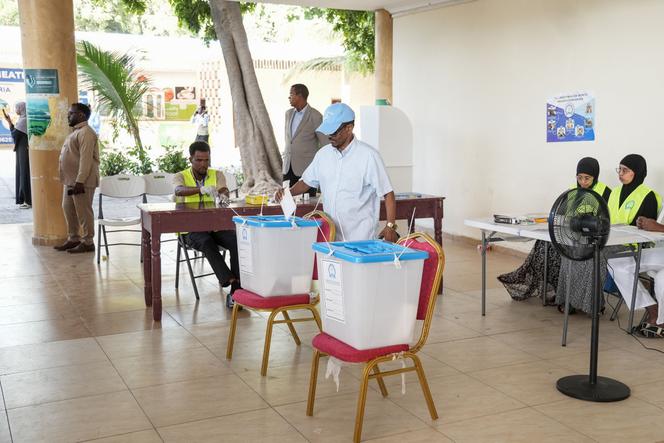
This Thursday’s local elections serve as a critical—and revealing—test case for this fraught transition. Intended to be a step toward broader democratization, they have instead highlighted the very obstacles reformers face. Reports of intense politicization by the presidency, aiming to influence outcomes in key regions, undermine the process’s credibility. Simultaneously, clan leaders are resisting the dilution of their traditional role in candidate selection. This creates a dual crisis: the new system is not yet trusted to be free and fair, while the old system’s gatekeepers are actively working to preserve their influence. The result is a hybrid process that satisfies no democratic ideal and risks exacerbating tensions rather than building consensus.
The path forward for Somalia is not a binary choice between a flawed clan system and an idealized Western-style democracy imposed overnight. A successful transition may require intermediate, innovative steps. These could include a “graduated universal suffrage” model, where secure urban centers pilot direct elections while other regions continue with a reformed, more transparent indirect system that includes women, youth, and civil society representatives alongside elders. Another critical step is civic education on a massive scale, fostering a sense of civic national identity to complement, not replace, clan identity. Ultimately, Somalia’s quest for universal suffrage is a marathon, not a sprint. The 2026 deadline may be less important than building irreversible momentum toward a system where every Somali citizen, regardless of clan, can freely choose their leaders—and hold them accountable. The alternative is the perpetual postponement of a Somali state truly owned by all its people.
You have 73.12% of this article left to read. The rest is reserved for subscribers.