

Togo’s ‘Allied Man’ Campaign Aims to Transform Gender Dynamics Through Male Engagement
A groundbreaking national initiative launched in Lomé this week seeks to fundamentally reshape gender relations in Togo by mobilizing men as active participants in promoting equality. The “Allied Man” campaign represents a strategic shift in addressing gender barriers by focusing on male engagement as a catalyst for women’s professional advancement.
Addressing Deep-Rooted Cultural Barriers
The campaign emerges against a backdrop of persistent cultural challenges. According to studies cited in the initiative, approximately 50% of Togolese men maintain traditional views about male leadership in relationships, creating significant obstacles to women’s access to education, skilled employment, and decision-making positions.
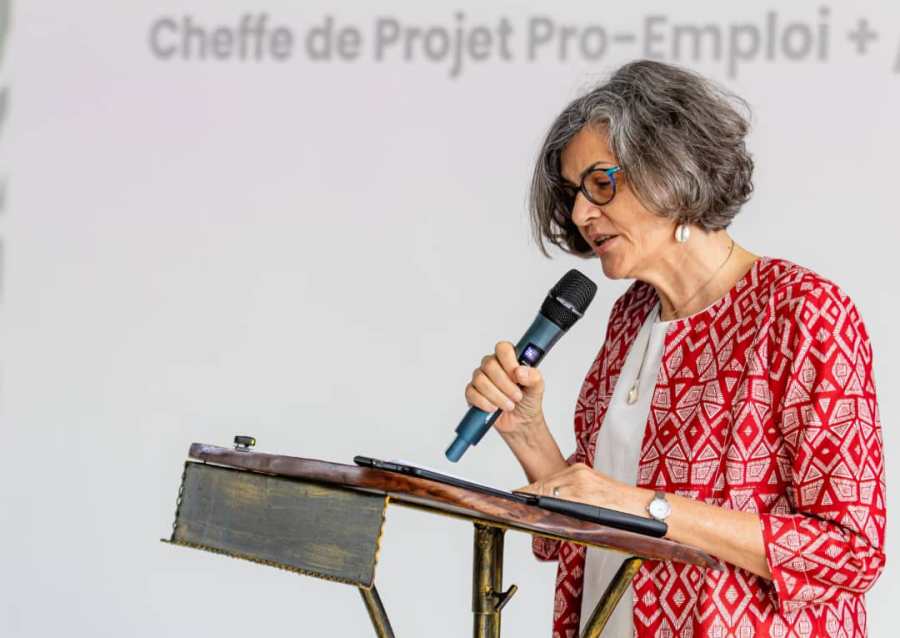
“What makes this approach particularly innovative is its recognition that gender equality cannot be achieved by working with women alone,” explains Dr. Bettina de Campos, head of the ProEmploi+ project representing German cooperation. “The campaign builds on extensive consultation processes that identified male engagement as a critical missing piece in previous equality efforts.”
A Network of Change Agents Across Togo
At the operational heart of the campaign are 135 specially trained Change Agents deployed across all five regions of the country. This diverse group includes 93 community-based representatives and 42 institutional agents from organizations like the National Employment Agency (ANPE).
Their ambitious mandate: to directly engage at least 10,000 men in conversations about shared domestic responsibilities, supporting women’s career ambitions, and redefining masculinity around principles of respect and complementarity rather than dominance.
The Economic Imperative of Gender Equality
Kodjo Yodo, Services Inspector at the Ministry of Solidarity, Gender, Family, and Child Protection, framed the initiative in both social and economic terms during the launch ceremony. “Supporting a woman’s success takes nothing away from a man,” he emphasized, pointing to the broader benefits of women’s economic participation for family stability and national development.
The campaign’s core message positions male support for female family members’ education and careers as an “investment in the future of his family and community” rather than a threat to traditional authority.

Evidence-Based Approach and Early Success Indicators
The initiative builds on pilot interventions in the Kara region, approximately 420 kilometers north of Lomé, where preliminary results have shown measurable changes in male attitudes and household practices. These early successes informed the national rollout strategy.
The accompanying media campaign, developed under the #HommeAllié concept by Togolese agency LYDER Group, leverages authentic testimonials and field-collected experiences to challenge stereotypes and normalize male advocacy for gender equality.
A Broader Regional Context
Togo’s campaign places it among a growing number of African nations recognizing that sustainable development requires addressing gender inequality through inclusive strategies that engage all community members. By focusing on positive masculinity, the initiative aims to create a cultural environment where women’s professional advancement benefits from, rather than conflicts with, traditional family structures.
The “Allied Man” campaign represents a significant evolution in Togo’s gender equality efforts, moving beyond awareness-raising to active community mobilization with men positioned not as obstacles to overcome, but as essential partners in progress.
This report is based on original coverage from Savoir News.