

Cameroon Gripped by Three-Day Lockdown as Opposition Protests Biya’s Contested Election Victory
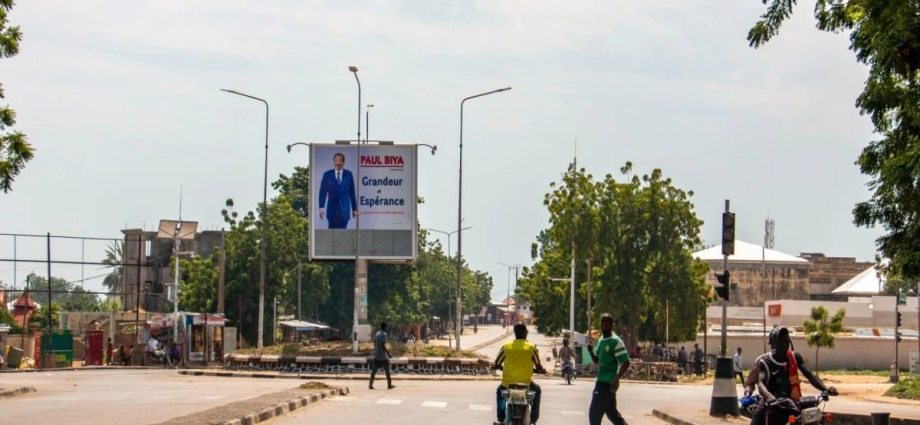
A tense and unnatural silence has descended upon major cities in Cameroon. The usual cacophony of honking cars, bustling markets, and street vendors has been replaced by an eerie stillness. This is not a public holiday; it is a profound act of political defiance. For three days, a nationwide stay-at-home protest, or ‘ghost town’ operation, is underway, orchestrated by opposition forces challenging the legitimacy of President Paul Biya’s eighth term in office.
A Nation Divided: The Spark of Civil Disobedience
The catalyst for this widespread civil disobedience was the official declaration of the October 12 election results. The victory was awarded to the 92-year-old incumbent, Paul Biya, the world’s oldest head of state, extending his four-decade-long rule. However, the opposition, led by figurehead Issa Tchiroma Bakary, has rejected the outcome, labeling it a fraudulent exercise that undermines the democratic will of the Cameroonian people.
In a powerful statement, Tchiroma called upon citizens to engage in a peaceful yet potent form of resistance. “Let us keep our shops closed, suspend our activities, remain at home in silence, to demonstrate our solidarity,” he urged. This call for a three-day lockdown is a strategic move to display mass discontent without taking to the streets in a manner that could invite a violent response from security forces.
Uneven Compliance and Deep-Seated Grievances
The response to the lockdown call has been a stark reflection of the country’s political divisions. In opposition strongholds, compliance has been overwhelming. In the economic powerhouse of Douala, the streets are desolate. The same scene unfolds in northern towns like Maroua and Garoua, which have recently been the epicenters of deadly clashes between protesters and authorities.
Conversely, in the political capital, Yaoundé, the situation is more fragmented. While a palpable tension hangs in the air, some businesses have chosen to risk opening their doors, creating a patchwork of defiance and normalcy. This uneven participation underscores the complex and regionalized nature of the political crisis gripping the nation.
The Human and Economic Cost of Protest
Behind the political posturing and the quiet streets lies a grim reality of human suffering and economic paralysis. The Associated Press reported that transport systems have ground to a halt, offices remain shuttered, and the cost of basic food staples has skyrocketed. The economic strain is tightening its grip on an already struggling population.
In Yaoundé, residents speak of alarming price hikes. A standard 5-liter bucket of potatoes, for instance, has reportedly jumped from $3.50 to nearly $9 in a matter of days. “Prices have gone up in ways no one anticipated,” lamented Celestin Mimba, a resident grappling with the sudden inflation. For daily wage earners and small-scale vendors like Caroline Akuh in Douala, the lockdown is a double-edged sword. “We are afraid to step out… we are tired of this,” she confessed, her voice echoing the exhaustion of a populace caught between political instability and economic survival.
Grief and Solidarity Fuel the Resistance
For many, this protest is not an abstract political act but a deeply personal expression of grief and solidarity. The recent wave of demonstrations has been met with a forceful crackdown by security forces. Official reports confirm at least four deaths in Douala alone, while the civil society group Stand Up For Cameroon has disclosed a national death toll of at least 23.
Amadou Adji, a resident of Garoua, embodies this painful connection. He supports the shutdown not just as a political statement, but as a form of mourning after losing his niece in the recent protests. “The lockdown is also a form of solidarity which we are showing to Tchiroma,” he stated, his personal loss inextricably linked to the national political struggle.
Government Response: Accusations and Blame
In the face of this widespread discontent, the government’s narrative remains unwavering. Officials have placed the blame squarely on the shoulders of the opposition, accusing them of inciting chaos and deliberately undermining national stability. The state media and government spokespersons frame the lockdown not as a legitimate protest but as an illegal attempt to destabilize the country.
This refusal to acknowledge the underlying grievances of the populace highlights a deepening chasm between the ruling elite and a significant portion of the citizenry. The government’s strategy appears to be one of weathering the storm, hoping that the economic pressure of a prolonged lockdown will eventually force people back to work, thereby breaking the spirit of the protest.
A Pivotal Moment for Cameroon’s Future
As the three-day lockdown continues, Cameroon stands at a critical crossroads. The silent, empty streets are a powerful testament to a population’s capacity for organized, non-violent resistance. The protest has successfully drawn international attention to the political crisis and demonstrated the depth of opposition to Biya’s extended rule.
Yet, the question remains: what comes next? Can this temporary paralysis translate into lasting political change? The opposition has proven its ability to mobilize, but the government retains a firm grip on the instruments of state power. The economic suffering inflicted by the lockdown may test the resolve of the protesters, while the government’s intransigence suggests a long and difficult road ahead for any meaningful dialogue or political reconciliation.
The world watches as this Central African nation navigates one of the most significant challenges to its political establishment in recent history. The outcome will not only determine the legacy of Paul Biya’s long reign but will also set the course for Cameroon’s democratic trajectory for years to come.
Source: Face2Face Africa