

Cameroon’s ‘Ghost Town’ Protest Concludes After Three Days of Uneven Adherence
The streets of Cameroon’s major cities began to stir back to life on Wednesday, November 5th, marking the end of a three-day “ghost town” protest that presented a fractured picture of the nation’s political opposition. The call for a nationwide shutdown, which began on Monday, was a bold gambit by Issa Tchiroma Bakary, a presidential candidate who continues to assert he is the true victor of the recent election. Yet, as the sun set on the third day, the results were not a clear-cut victory for either the government or the opposition, but rather a testament to the complex and cautious political climate in the Central African nation.
A Call for Paralysis Meets a Muted Reality
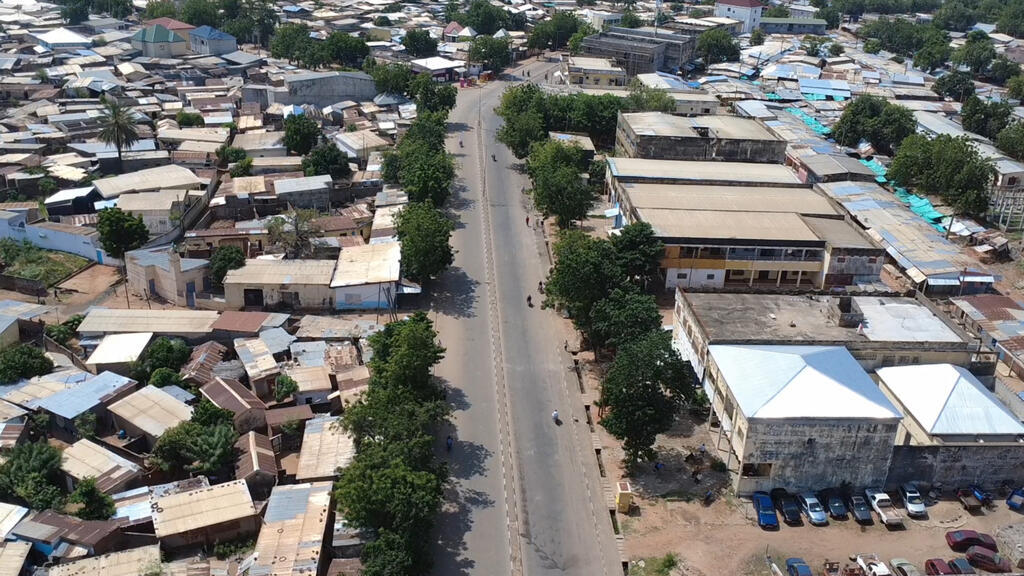
Issa Tchiroma Bakary’s appeal was unambiguous: a total paralysis of economic and social activity for 72 hours. The goal was to demonstrate popular dissent and challenge the official results of the presidential poll. However, the response from the Cameroonian populace was anything but uniform. In the political heartland of the opposition, particularly in the restive English-speaking regions, the protest call found more fertile ground. Here, the streets wore a more deserted look, with shops shuttered and a palpable tension in the air. The memory of previous conflicts and a deep-seated sense of marginalization fueled a higher degree of compliance.
Conversely, in the bustling economic capital, Douala, and the political capital, Yaoundé, the story was different. While there was a noticeable drop in the usual frenetic pace, life did not come to a complete standstill. Essential services continued, some markets cautiously opened their doors by midday, and a trickle of traffic defied the protest call. This patchwork adherence reveals a nation caught between the fear of political reprisal, the economic necessity of daily survival, and a weariness from prolonged periods of instability. How does a population weigh the principles of political contestation against the pressing need to put food on the table? The uneven participation in the ghost town operation is a silent answer to that very question.
The Political Stakes and Public Sentiment
For Bakary and his supporters, the protest was a necessary tool to keep their political grievances in the international spotlight and to maintain pressure on the government. Yet, the muted response in key areas suggests a significant challenge in mobilizing a nationwide movement. The average Cameroonian, grappling with inflation and unemployment, often finds themselves in an impossible position. Participating in such protests carries risks, from encounters with security forces to the simple loss of a day’s income—a cost many cannot afford.
This isn’t the first time Cameroon has witnessed such tactics, and the government’s playbook is well-rehearsed. A heavy security presence was deployed in sensitive areas, a clear signal intended to deter widespread participation and ensure a minimum level of normalcy. The authorities’ ability to maintain a semblance of order in the major cities will likely be framed as a success, a demonstration that the state’s authority remains largely unchallenged.
Beyond the Shuttered Shops: The Economic and Social Toll
The term “ghost town” is evocative, but the reality is more nuanced. Beyond the political posturing, these actions have a real and immediate impact on the livelihoods of everyday citizens. Small business owners, street vendors, and taxi drivers—the backbone of the informal economy—face an agonizing choice. Observing the protest means losing crucial revenue; ignoring it can mean social ostracization or worse.
This economic disruption ripples through communities, exacerbating the very hardships that often fuel political discontent in the first place. The three-day period, therefore, was not just a political barometer but also a voluntary period of collective economic hardship, a sacrifice that many were either unwilling or unable to make uniformly across the country’s diverse social and geographic landscape.
What Comes After the Ghosts Depart?
As the country returns to its usual rhythm, the lingering question is, what has been achieved? For the opposition, the partial success demonstrates that a core base of support remains activated and discontented. It keeps their narrative alive. For the government, the uneven participation allows it to project an image of stability and control, arguing that most Cameroonians have rejected the call for disruption.
However, the underlying tensions that prompted the protest call have not vanished. The political stalemate persists, and the grievances in the Anglophone regions remain largely unaddressed. The ghost town protest may be over, but it has served as a stark reminder that Cameroon exists in a fragile equilibrium. The nation is a tapestry of differing loyalties and experiences, and any attempt to understand its political future must account for the complex, and often contradictory, realities witnessed over these three days.
The path forward remains uncertain. Will this event galvanize a more unified opposition, or will it expose its limitations? Can the government translate this moment of fragile calm into meaningful dialogue and reconciliation? The answers to these questions will determine Cameroon’s trajectory far more than the success or failure of a three-day shutdown.
Source: RFI