

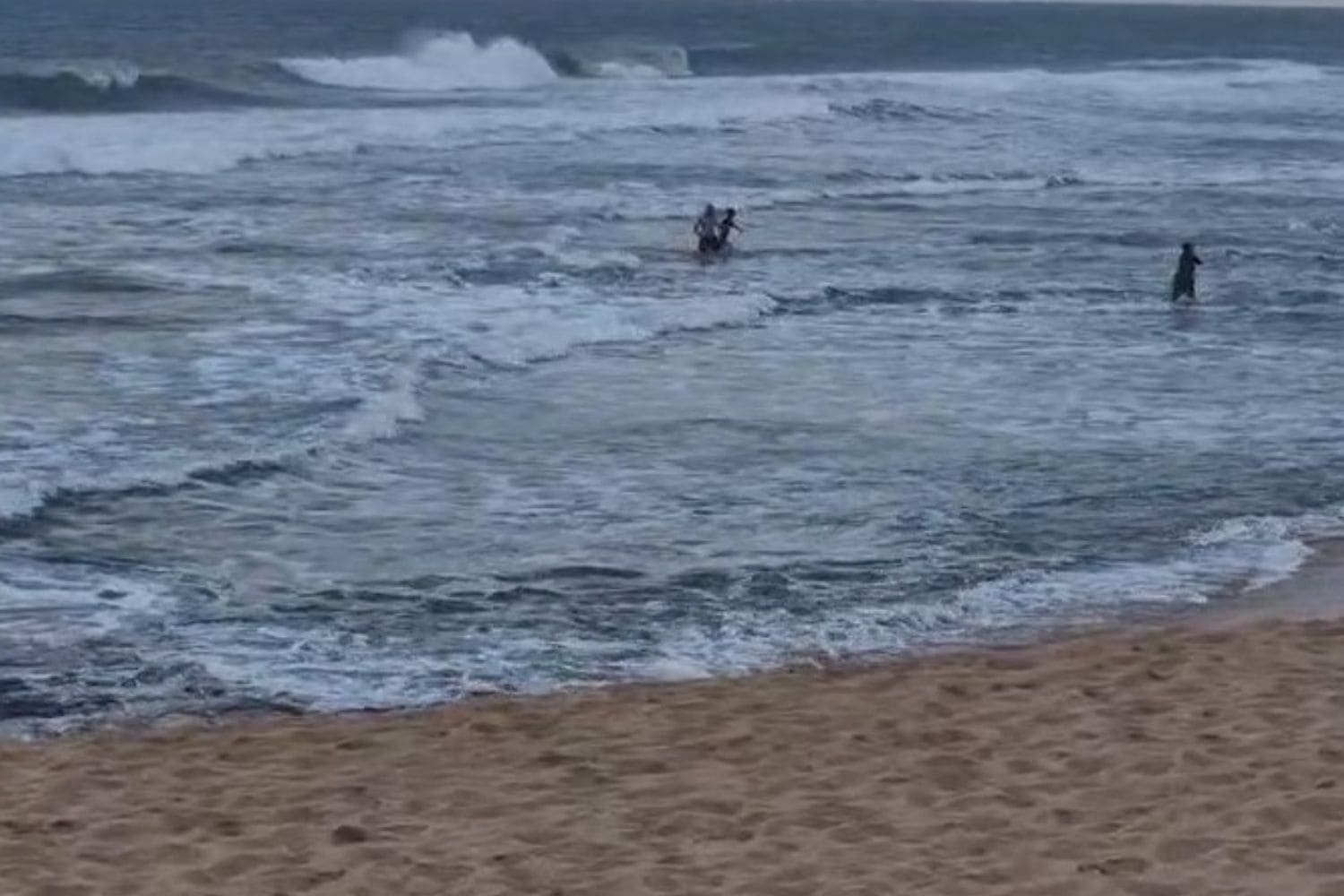
A festive day at the beach turned to tragedy on the KwaZulu-Natal South Coast, underscoring the often-underestimated dangers of South Africa’s coastline and inland waters during the summer season. Five individuals were swept out to sea from Pennington main beach on the evening of Thursday, 1 January 2026, in an incident that highlights the lethal power of rip currents.
Rescue
According to IPSS Medical Rescue spokesperson Samantha Meyrick, the emergency response unfolded with devastating results. “One victim was successfully rescued and is currently in a stable condition,” Meyrick reported. “However, one was confirmed deceased, with his body recovered earlier. A second body washed ashore approximately 100 meters from the initial point of entry.”
The incident serves as a critical reminder of the peril of rip currents—powerful, channeled currents of water flowing away from shore. They can occur at any beach with breaking waves, including the popular KZN South Coast. Unlike a traditional undertow, rip currents pull swimmers horizontally out to sea, not downward. The key to survival is not to fight the current directly, but to swim parallel to the shoreline to escape its narrow channel before attempting to return to land.
Meyrick confirmed the ongoing search efforts: “Lifeguards conducted immediate search operations in the water, while IPSS Medical Rescue and other emergency services remained on standby to provide medical support. One person was saved by lifeguards, but the other two remain missing and are presumed dead.”
The National Sea Rescue Institute (NSRI) and police are scheduled to continue the search on Friday. The NSRI, a volunteer organization, plays a vital role in South African maritime safety, operating rescue craft and providing water safety education.
Five beachgoers were washed out to sea on the KwaZulu-Natal South Coast. The incident occurred on Pennington main beach on the evening of Thursday, 1 January 2026 @TheCitizen_News pic.twitter.com/fTgG7uytBz
— Faizel Patel (@FaizelPatel121) January 2, 2026
Search
Soldier drowning
In a separate but equally tragic incident highlighting inland water dangers, police in the Capricorn District have opened an inquest after the body of a 36-year-old female South African National Defence Force (SANDF) member was discovered in a river stream in Polokwane. This grim discovery was made on New Year’s Day at approximately 11:00 AM.
Police spokesperson Colonel Malesela Ledwaba detailed the sequence of events: “The report indicates that earlier this morning, around 04:00, the deceased and two other occupants of a Renault Triber were swept away by heavily flowing water after their vehicle became stuck under a bridge on Grobler Street.”
This incident is a stark example of the sudden danger of flash flooding, even in urban areas. “Low-water crossings” or bridges can become death traps during heavy rainfall, as water depth and velocity increase rapidly. A mere 15 centimeters of fast-moving water can knock an adult off their feet, and 60 centimeters can sweep away most vehicles.
“It is further reported that the other two occupants, including the driver, managed to grab reeds and exit the river,” Ledwaba continued. “The deceased, unfortunately, did not survive. Divers conducted a search, and the body was found about 2.5 kilometers downstream from the initial scene.”
Investigations
Colonel Ledwaba confirmed that the circumstances surrounding both this incident and the beach tragedy remain under investigation. These back-to-back New Year’s Day disasters provide a sobering start to 2026, emphasizing the critical importance of water safety awareness—whether at the coast facing unpredictable currents or inland near rivers susceptible to sudden flooding. The fundamental rule remains: never underestimate the power of water, and always heed official warnings regarding weather and sea conditions.